
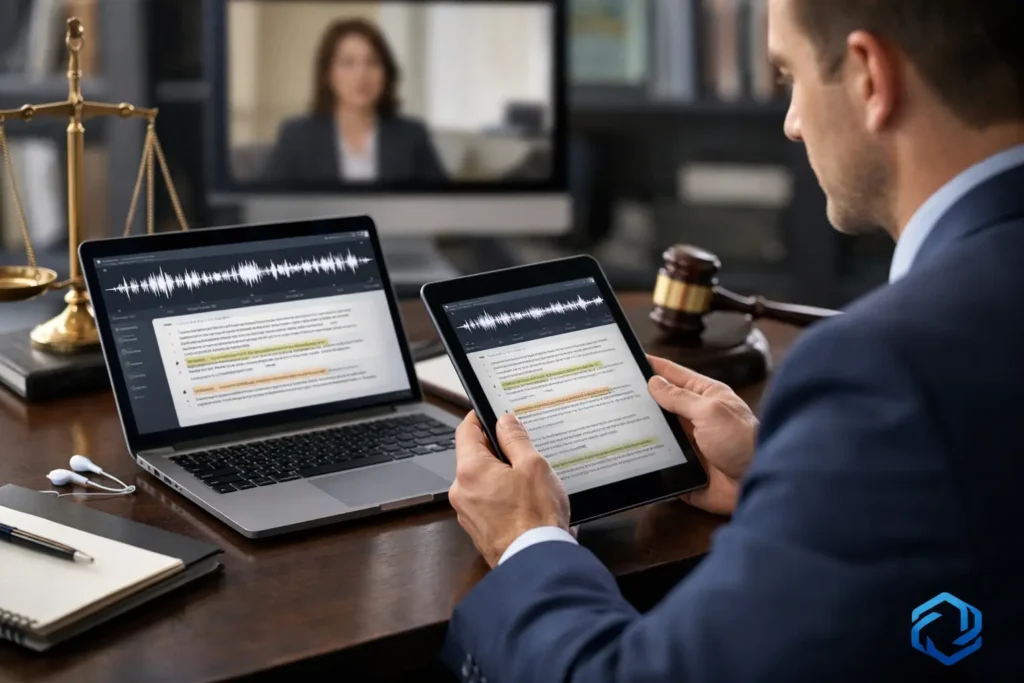
A deposition clip loses force when the team has to hunt for the exact line, confirm the quote, and cue the video under pressure. That is where how attorneys use synchronized transcripts becomes less of a technical feature and more of a case management advantage. When the written transcript is electronically matched to the spoken words in a video, attorneys can move from review to presentation with far less friction.
For litigators, paralegals, and trial support staff, synchronized transcripts help connect testimony, strategy, and presentation in one workable format. Instead of treating the transcript and the video as separate records, the legal team can review both together. That saves time, reduces avoidable errors, and makes deposition footage more useful in mediation, motion practice, and trial preparation.
Why synchronized transcripts matter in litigation
A standard transcript is valuable on its own. A video record is valuable on its own. But when they are synchronized, each becomes easier to use.
The practical benefit is speed. Attorneys can search for a word or phrase in the transcript and go directly to that moment in the video. That changes how testimony is reviewed. Rather than scrubbing through footage and cross-checking page and line references manually, the team can verify tone, pause, emphasis, and demeanor in context.
That context matters. A witness answer may read cleanly on paper but land very differently on screen. Hesitation, confidence, evasiveness, or certainty often become clearer in video. Synchronization gives attorneys a faster way to compare what was said with how it was said.
There is also a reliability benefit. When clips are built from synchronized testimony, the process is more precise. That precision matters when deadlines are tight and the record must be handled carefully for use in court or settlement discussions.
How attorneys use synchronized transcripts during case preparation
One of the most common answers to how attorneys use synchronized transcripts is simple: they use them to prepare faster and with more confidence. Complex cases generate hours of testimony, and review time is rarely generous.
Faster witness analysis
When preparing for follow-up depositions, mediation, or trial, attorneys often need to assess a witness beyond the text of the transcript. A synchronized file allows them to jump to the exact answer, study demeanor, and determine whether a statement will help or hurt if shown to a jury.
This is especially useful when the written testimony appears neutral, but the delivery tells a more complete story. An attorney can evaluate whether the witness seemed direct, defensive, uncertain, or coached. That kind of analysis is harder when the video and transcript are not aligned.
More efficient impeachment planning
Impeachment work depends on precision. The legal team has to find prior testimony quickly, confirm that the language is exact, and be ready to present it clearly. Synchronized transcripts make that process more manageable.
Instead of pulling paper excerpts and then locating the matching footage later, attorneys can identify the testimony and build a presentation plan from the same source. That does not eliminate judgment – some impeachment is stronger in text, some is stronger on video – but it gives the team better tools to decide.
Cleaner issue spotting across long depositions
In technical, medical, or multi-party matters, issue spotting can become tedious fast. Searchable synchronized testimony helps attorneys isolate admissions, qualification testimony, causation statements, and inconsistent accounts without repeatedly switching between formats.
That can be particularly helpful when several team members are reviewing the same witness for different purposes. One person may be focused on liability, another on damages, another on designating clips for presentation. Synchronization supports a more organized review process.
How attorneys use synchronized transcripts in mediation and settlement work
Mediation often rewards clarity and efficiency. The side that can present key testimony cleanly tends to have an advantage. This is another area where how attorneys use synchronized transcripts becomes very practical.
A short, well-selected clip tied to the exact transcript language can carry more weight than a verbal paraphrase. It allows decision-makers to see and hear the testimony rather than rely on a description of it. That is useful when credibility is a central issue.
Synchronized transcripts also help attorneys evaluate what to show and what to leave out. Not every strong line on paper makes a strong video clip. Sometimes the opposite is true. Having both synced together allows counsel to select the presentation format that best serves the moment.
There is a trade-off, though. More material is not always better. In mediation, overusing video can dilute impact. The value comes from selecting testimony that is concise, relevant, and easy to understand in context.
How attorneys use synchronized transcripts for trial presentation
Trial is where synchronized transcripts often show their full value. By that stage, speed and precision matter even more. The legal team needs to locate testimony, prepare clips, respond to objections, and present evidence without unnecessary delay.
Building designated video excerpts
When deposition testimony will be used at trial, synchronized transcripts make excerpting more efficient. Counsel can identify the exact passage in the text and match it directly to the corresponding video segment. That shortens the path from designation to playable exhibit.
For trial teams, that means less manual guesswork and fewer opportunities for timing mistakes. It also supports clearer communication between attorneys, paralegals, and litigation support vendors handling final playback materials.
Supporting courtroom playback
In courtroom or hearing settings, synchronized testimony can improve presentation flow. If an attorney needs to move to a specific answer quickly, a synchronized file makes that easier. That can be important when the court’s time is limited and the team needs to stay tightly organized.
It also helps with juror comprehension. When video testimony is presented with matching text, the content is easier to follow, especially in cases involving technical language, poor audio moments, or detailed expert opinions. The goal is not visual flair. The goal is clarity.
Preparing for objections and revisions
Trial designations often change. Objections are raised, rulings come in, and clips may need to be shortened or reordered. Synchronized transcripts make those revisions easier to manage because the text and video remain connected.
That flexibility matters most when deadlines are compressed. A team working against court-imposed timing needs accurate, responsive support, not a process that adds friction at the last minute.
What legal teams should look for in synchronized transcript work
Not all synchronization support is equal, and attorneys usually notice the difference when the case gets busy. Accuracy comes first. If the transcript and video are not aligned properly, the benefit drops quickly.
Turnaround also matters. Litigation schedules do not leave much room for delay, particularly when a deposition taken one week needs to be reviewed, edited, and prepared for use shortly after. A provider who understands legal procedure, court expectations, and production timing can make the workflow much easier for the firm.
The final point is usability. Legal teams need deliverables that fit real-world litigation tasks, not files that require extra translation or troubleshooting. That includes dependable formatting, organized outputs, and responsiveness when revisions are needed.
For firms in the Seattle area handling deposition video, hybrid proceedings, or trial preparation, working with an experienced legal video specialist can reduce stress across the life of a case. Royal Video Productions has built its work around that expectation: accuracy, responsiveness, and courtroom-ready results.
How attorneys use synchronized transcripts most effectively
The strongest use of synchronized transcripts is rarely about technology alone. It comes from using them at the right points in the case. Early on, they help the team analyze witnesses and shape strategy. Closer to mediation, they support sharper presentation choices. Near trial, they help turn testimony into organized, usable evidence.
Still, it depends on the matter. In some cases, synchronization is essential because witness demeanor is central. In others, it mainly improves internal efficiency. Either way, attorneys benefit when the record is easier to search, easier to verify, and easier to present.
That is why synchronized transcripts continue to matter. They help legal teams spend less time chasing testimony and more time using it well.