
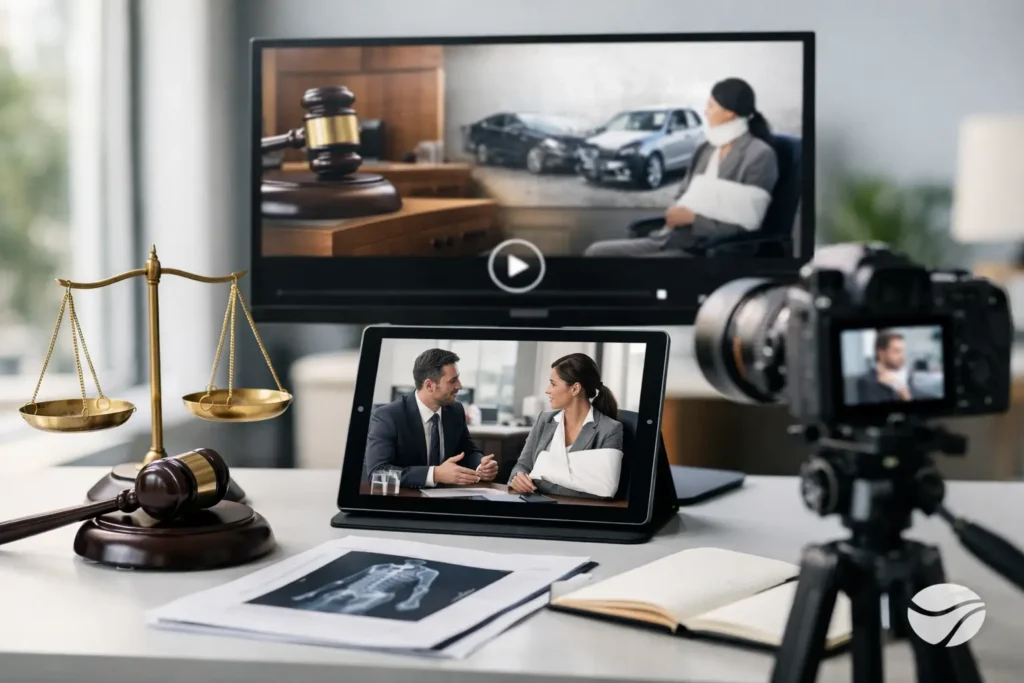
A weak presentation can leave a strong personal injury case looking ordinary. The right visuals do the opposite. These personal injury video presentation examples show how legal teams can turn scattered facts, medical records, and testimony into a clear, credible story that holds attention in mediation, settlement discussions, and trial.
For attorneys and litigation support staff, the issue is rarely whether video helps. It is which type of video helps, when it should be used, and how much editing is useful before the presentation starts to look argumentative instead of persuasive. In personal injury matters, those choices affect not only clarity but also credibility.
Why personal injury video presentation examples matter
Personal injury cases often involve facts that are easy to say but harder to feel. A client can testify about pain, mobility loss, or lifestyle changes. A physician can explain prognosis. An economist can discuss future costs. But when the presentation is fragmented, the decision-maker has to work too hard to connect the dots.
Video solves part of that problem because it organizes time, sequence, and human detail in a way paper rarely can. That does not mean every case needs a highly produced piece. In some matters, a tightly edited deposition excerpt or synchronized playback of key testimony is more effective than a longer narrative presentation. It depends on the audience, the venue, the deadline, and the evidentiary purpose.
The best legal video work in this category is not flashy. It is accurate, disciplined, and built around the needs of the case.
7 personal injury video presentation examples attorneys use
1. Day-in-the-life video
This is one of the most recognized formats in catastrophic injury and serious impairment cases. A day-in-the-life presentation documents the plaintiff’s routine and shows what ordinary tasks now require in terms of time, pain, assistance, or adaptive equipment.
When done well, this format avoids melodrama. It shows reality. Getting out of bed, bathing, dressing, transferring to a wheelchair, preparing food, attending therapy, or managing medications can all communicate functional loss more effectively than a written description. For mediation, this often helps move the discussion away from abstract damage numbers and toward lived consequences.
The trade-off is that this format demands care. Over-editing, sentimental music, or scenes that appear staged can hurt trust. A credible production keeps the focus on accurate observation and clean structure.
2. Medical treatment timeline video
In cases with extensive treatment, jurors and adjusters can lose the chronology quickly. A medical timeline video places records, imaging, procedure dates, provider information, and relevant testimony into a logical sequence.
This format works especially well when the defense is suggesting gaps in treatment, preexisting conditions, or exaggeration. Instead of asking the audience to sort through years of records, the presentation lays out what happened, when it happened, and why each stage matters. The result is often less confusion and a better foundation for discussing causation and damages.
A timeline presentation should stay disciplined. If every appointment and every record page appears on screen, it becomes cluttered. The stronger approach is selective and anchored to the legal theory of the case.
3. Edited deposition testimony presentation
Some of the most effective personal injury video presentation examples are also the simplest. An edited deposition presentation can isolate the exact testimony needed from a party, eyewitness, treating doctor, expert, or corporate representative and present it in a courtroom-ready sequence.
This is particularly useful when a witness is unavailable, when impeachment issues are likely, or when counsel wants to present key admissions with maximum clarity. Transcript synchronization adds another layer of utility because the audience can follow the words while seeing the witness deliver them.
The value here is precision. Instead of relying on long clips that dilute the point, the presentation can focus on the portions that matter most. The caution is obvious: edits must be legally sound, context must be preserved, and the final version must be prepared for the procedural realities of the hearing or trial.
4. Accident reconstruction and liability animation support
Not every personal injury matter needs reconstruction support, but when liability is disputed, visuals can make a major difference. This may include a video built around scene evidence, vehicle positions, measurements, photographs, surveillance footage, black box data, or expert analysis.
The purpose is not to replace the expert. It is to help the expert’s opinion become understandable. If impact angle, sight lines, timing, speed, or roadway geometry are central to liability, a visual presentation can reduce confusion and make testimony easier to absorb.
This category demands restraint because juries can react strongly to anything that looks more speculative than demonstrative. The closer the presentation stays to established evidence and expert foundation, the more useful it becomes.
5. Settlement or mediation summary video
Mediation has its own pace and its own audience. A settlement presentation video is typically shorter, more selective, and more focused on clarity than on formal evidentiary structure. It may combine short witness clips, medical visuals, accident scene material, record highlights, and damages themes into a concise presentation for a mediator or opposing side.
This format can be effective when the file is large and the defense has not fully absorbed the human impact of the injury. It can also help when multiple carriers, adjusters, or decision-makers are involved and need a fast but accurate understanding of the case.
The best mediation videos respect time. Ten focused minutes usually accomplish more than thirty wandering ones. If the video tries to argue every point, it can lose force. If it identifies the key liability and damages themes cleanly, it often performs better.
6. Before-and-after lifestyle comparison video
In some cases, the most persuasive contrast is not a medical chart but a visible change in function. A before-and-after presentation uses pre-injury photos or video alongside current footage to show what has changed in mobility, work capacity, recreation, family roles, or independence.
This can be compelling in cases involving athletes, physically active plaintiffs, skilled tradespeople, or parents whose daily family role has changed sharply after injury. The contrast gives context to damages that might otherwise sound subjective.
The challenge is authenticity. Pre-injury material should be representative, not cherry-picked to suggest a lifestyle that was unusual rather than normal. Current footage should likewise be fair and grounded in reality. When the comparison feels balanced, it can be very powerful.
7. Hybrid trial presentation with synchronized exhibits
Complex injury cases often benefit from a hybrid format rather than a single-purpose video. This approach may combine deposition clips, synchronized transcripts, exhibit callouts, medical illustrations, and short demonstrative segments into one coordinated presentation package.
For trial teams, this is often the most practical route. Instead of treating each element as separate media, the presentation is prepared to support openings, witness examinations, impeachment, and playback needs within a consistent technical framework. That saves time in the courtroom and reduces the risk of last-minute scrambling.
This is where experienced legal video production matters most. The issue is not just making the material look polished. It is making sure the files are organized, compatible, and ready for use under pressure.
How to choose the right format for the case
The right video presentation starts with the litigation objective. If the goal is to humanize damages, a day-in-the-life or before-and-after presentation may be the right fit. If the goal is to clarify a complicated treatment history, a timeline may carry more weight. If liability is the real battleground, reconstruction support or targeted deposition editing may matter more than anything focused on damages.
Venue also matters. Mediation presentations can be more streamlined and thematic. Trial presentations need tighter evidentiary discipline and technical reliability. A piece that works well in a conference room may need significant revision before it belongs in front of a jury.
Timing matters too. Some presentations are best developed early because they help shape settlement posture. Others should be assembled closer to hearing or trial, after testimony and rulings are clearer. Legal teams that plan video strategy early usually have more options and fewer rushed decisions.
What makes a presentation credible
In legal video, credibility comes from control. The footage should be stable, audio should be clean, graphics should be readable, and edits should support the record rather than compete with it. Sloppy production distracts from strong facts. Overproduction can create its own problem by making the piece feel less trustworthy.
That is why personal injury video presentations should be built by people who understand both visual communication and litigation workflow. Deadlines shift. Exhibit lists change. A clip that seemed essential may become unnecessary after a ruling. The production process has to support that reality.
For Seattle-area legal teams handling personal injury litigation, the standard should be simple: every video element should make the case easier to understand, easier to present, and harder to dismiss. Royal Video Productions has built its reputation around that standard, with courtroom-aware execution and the responsiveness these matters demand.
A good legal video does not overpower the facts. It lets the facts land with the clarity they deserve.