
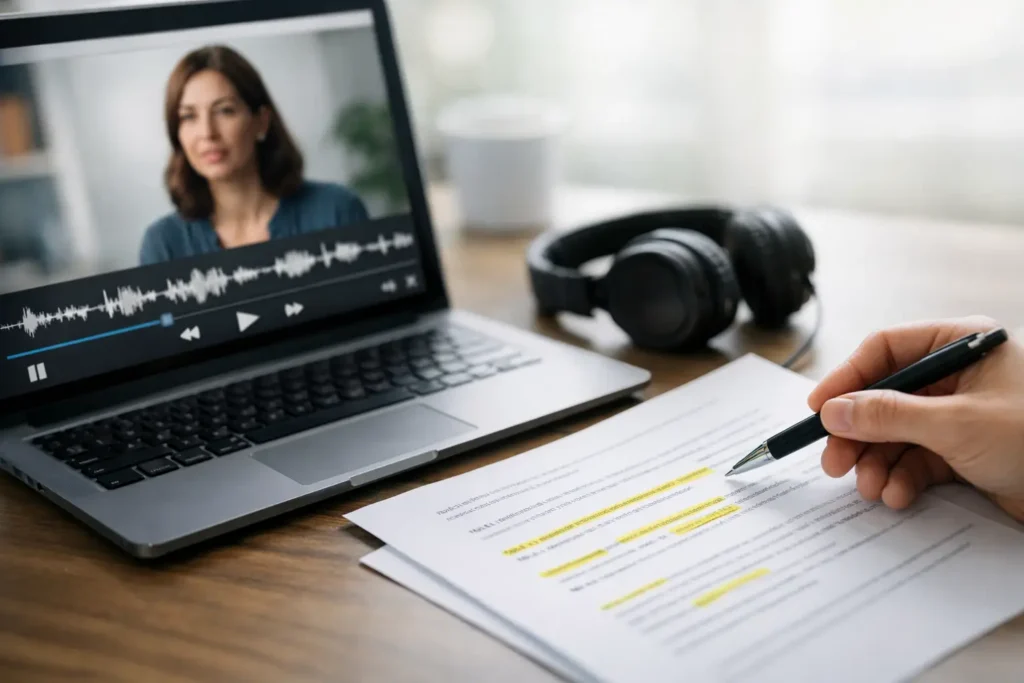
A witness answers a key question in deposition, and your team needs that exact clip on screen with the matching text at the same moment. That is where transcript synchronization matters. If you have ever asked what is transcript synchronization, the short answer is this: it is the process of linking a deposition or legal video to the certified transcript so the text and spoken testimony move together, line by line, as the video plays.
For attorneys and litigation support teams, that pairing is not a technical novelty. It is a practical trial-preparation tool. When done correctly, synchronized video helps you locate testimony faster, prepare impeachment material more efficiently, and present evidence in a format that is easier to review under deadline.
What is transcript synchronization in legal video?
In legal practice, transcript synchronization means matching the timing of spoken words in a video deposition or recorded statement to the corresponding text in the transcript. As the witness speaks, the transcript highlights or advances in sync with the audio and video.
The result is a searchable, reviewable record that combines two essential pieces of evidence: what was said and how it was said. For many litigators, that distinction matters. Tone, pauses, hesitation, emphasis, and demeanor can all affect how testimony is evaluated. A paper transcript captures the words. A synchronized transcript adds context that can be critical for motion practice, mediation, and trial.
This is most commonly used with video depositions, but it can also support other litigation presentations where precise playback and text alignment are necessary. The goal is accuracy, not decoration. In legal settings, synchronized testimony needs to be dependable enough for serious case work.
How transcript synchronization works
The process starts with two source files: the final transcript and the corresponding video recording. A trained legal video professional uses specialized software to align transcript text with the exact points in the recording where each word is spoken.
That may sound straightforward, but precision matters. If timing is off, even by a small margin, the review experience becomes frustrating and the final product loses value. Proper synchronization requires careful attention to speaker changes, transcript formatting, audio clarity, and timing consistency.
Once completed, the synchronized file typically allows users to click on a word, page, or line in the transcript and jump directly to that point in the video. It may also support designations, issue coding, clip creation, and playback for mediation or courtroom presentation, depending on the platform being used.
In other words, transcript synchronization turns a long deposition into something your team can actually work with quickly.
Why attorneys use synchronized transcripts
The main advantage is speed. In active litigation, legal teams do not have the luxury of rewatching hours of testimony every time they need one answer. A synchronized transcript shortens the path from question to clip.
It also improves precision. If you are preparing impeachment material, witness outlines, mediation presentations, or trial designations, you need confidence that the excerpt you selected matches the transcript exactly. Working from synchronized testimony reduces guesswork and helps prevent errors in clip selection.
There is also a strategic advantage. Reading testimony on a page is one thing. Seeing and hearing it with the text on screen is different. Judges, juries, mediators, and opposing counsel often absorb synchronized testimony more clearly because the format supports both visual and verbal processing. That does not mean every case needs video playback, but in the right matter, presentation quality can influence how testimony lands.
For legal support staff, the operational benefit is just as important. Synchronized files make it easier to organize testimony, coordinate with trial teams, and respond to attorney requests under compressed deadlines.
Common use cases in litigation
Transcript synchronization is especially useful in deposition-heavy matters. Complex civil cases, personal injury litigation, expert testimony, liability disputes, and damages presentations often involve large volumes of recorded testimony. In those cases, being able to search, review, and clip testimony efficiently can save substantial preparation time.
It is also valuable for impeachment. If a witness departs from prior testimony, your team may need to isolate a clean, accurate excerpt quickly. A synchronized transcript helps you identify the exact exchange and prepare a usable clip without manually scrubbing through a full recording.
Mediation is another common setting. Attorneys often want concise testimony segments that highlight admissions, contradictions, or impactful factual points. Synchronized testimony makes those segments easier to find and easier to present.
At trial, the benefit becomes even more apparent. Designated deposition clips often need to be reviewed, edited for objections, and prepared in a format suitable for presentation. Starting with synchronized source material can make that workflow more efficient and more reliable.
What transcript synchronization is not
It is not just closed captioning. Captions are generally designed to display spoken content for accessibility or general viewing. Transcript synchronization in litigation is built around the certified transcript and legal workflow. That distinction matters because attorneys are not simply trying to display words on a screen. They are working from testimony that may be designated, challenged, edited, or presented as evidence.
It is also not the same as automated transcription. AI-generated text can be useful in some business settings, but legal proceedings demand a much higher level of reliability. Transcript synchronization depends on the official transcript, not a rough machine-generated version that may misidentify speakers or misstate critical terms.
And it is not a substitute for proper legal video recording. If the original deposition video has poor audio, framing problems, or recording interruptions, synchronization can still be limited by the quality of the source material. Good synchronization starts with competent legal video capture.
Why accuracy matters so much
In legal video work, small errors create larger problems downstream. A mismatch between transcript text and video timing can slow review, complicate clip preparation, and undermine confidence in the final deliverable. If your team is preparing testimony for court, there is very little room for approximation.
That is why transcript synchronization should be handled by professionals who understand both the technical process and the litigation environment. Court deadlines are not flexible. Designation disputes are not theoretical. Trial teams need outputs that are organized, dependable, and ready to use.
Accuracy also affects attorney efficiency. When synchronized testimony is prepared correctly, your team spends less time checking whether the video aligns with the transcript and more time working on strategy.
How to evaluate a transcript synchronization provider
Not every video vendor approaches legal work with the same level of rigor. If you are outsourcing transcript synchronization, it is worth asking how the provider handles transcript updates, timing verification, clip exports, and compatibility with common legal presentation workflows.
Turnaround is another factor, but speed alone is not enough. Fast delivery only helps if the finished product is accurate and usable. The best providers combine responsive service with legal-specific production experience.
It also helps to work with a team that understands the larger litigation context. Transcript synchronization is often one part of a broader need that may include video depositions, Zoom or hybrid deposition support, legal editing, and trial-ready playback files. A provider with that background is more likely to anticipate practical issues before they become deadline problems.
For firms in the Seattle area, that is one reason legal teams continue to rely on specialists such as Royal Video Productions, where transcript synchronization is handled as part of a broader litigation support process rather than as a generic post-production task.
When transcript synchronization is worth the investment
Not every case needs it. If a matter involves minimal recorded testimony or is unlikely to require video presentation, a standard transcript may be enough. But once a case includes critical witness testimony, multiple video depositions, or a realistic possibility of mediation or trial playback, synchronization often pays for itself in time saved and preparation quality.
It becomes especially valuable when several people need to work from the same testimony. Attorneys, paralegals, trial consultants, and support staff can all move faster when the record is easier to search and review.
The broader point is simple. Transcript synchronization is not about adding polish for its own sake. It is about making testimony more usable under real litigation conditions, where accuracy, speed, and presentation quality all matter at once.
If your case depends on recorded testimony, synchronized transcripts can turn hours of video into a working tool your team can rely on when the pressure is highest. That is often the difference between having testimony on file and being fully prepared to use it.