
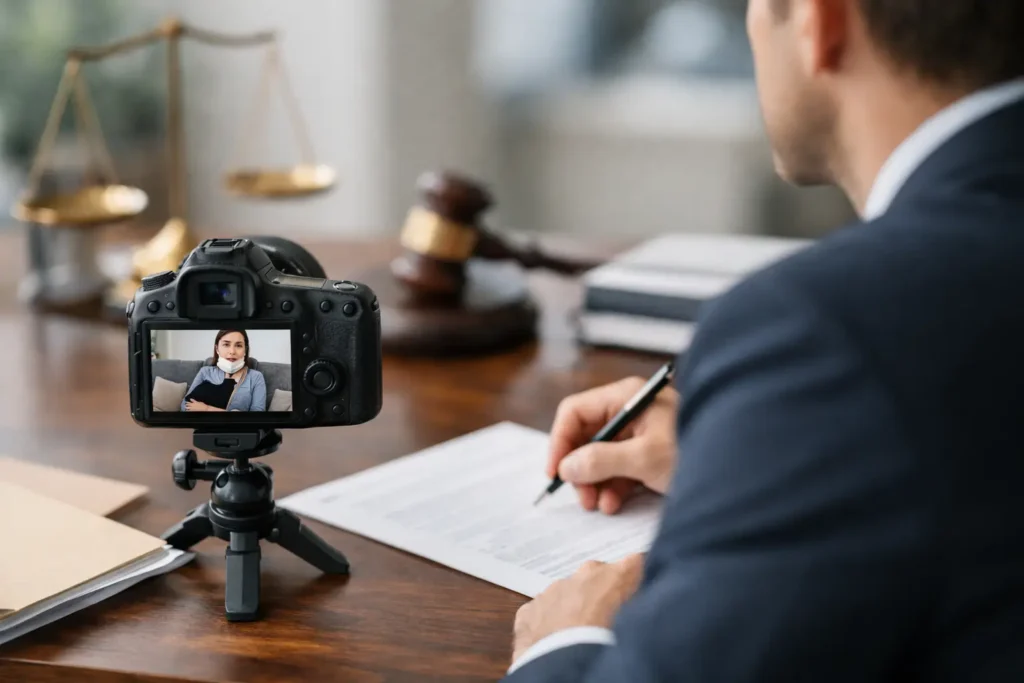
A serious injury case can turn on one practical problem: the carrier reads the demand, reviews the records, and still does not feel the human cost. That gap is exactly where a settlement demand video can matter. When it is planned well, produced professionally, and tied to the legal theory of damages, it gives adjusters, defense counsel, and mediators a clearer picture of how the injury affects daily life.
For plaintiff attorneys and litigation teams, that does not mean video belongs in every case. A demand package is only as strong as its credibility, and video can either sharpen the message or distract from it. The value comes from using the format selectively, with disciplined production and a clear objective.
What a settlement demand video is meant to do
At its best, a settlement demand video is not a commercial and not a dramatic montage. It is a focused visual presentation that supports the demand by showing damages in a way medical records and written narratives often cannot. In personal injury and wrongful death matters, that may include the client’s physical limitations, routine tasks that now require assistance, visible pain behaviors, treatment burden, or the impact on family life and work capacity.
The strongest versions usually combine several forms of evidence into one coherent story. Short interview segments, day-in-the-life footage, still photographs, medical imagery, key record excerpts, and carefully selected demonstratives can work together to make the demand more concrete. The point is not to overproduce the case. The point is to reduce abstraction.
That distinction matters. Insurance professionals and defense lawyers review claims all day. They are trained to test assertions and discount emotional overreach. A polished but exaggerated piece can backfire. A credible, accurate, well-edited video can do the opposite. It can move the discussion from skepticism to evaluation.
When a settlement demand video makes the most sense
Some cases benefit immediately from visual presentation. Others do not. The best candidates tend to share one feature: damages are real, substantial, and easier to understand when seen.
Catastrophic injury cases are an obvious fit, especially when mobility loss, cognitive change, chronic pain, or long-term care needs are central to valuation. A day-in-the-life segment can show effort, fatigue, and dependency more effectively than a paragraph in a letter. The same is often true in traumatic brain injury matters, where subtle deficits may become clearer through ordinary interactions than through technical medical language alone.
Cases involving strong liability but contested damages are also good candidates. If fault is largely established and the disagreement centers on the scope of loss, video can help the defense side evaluate exposure more realistically. Mediation often becomes more productive when the other side is no longer working from assumptions.
There are also cases where a settlement demand video may not be the right tool. Minor soft tissue claims, disputes with limited documentary support, and matters where the client presents poorly on camera can require a different strategy. If the visuals do not add meaningful proof, a straightforward written demand may carry more authority. In legal presentation work, restraint is often a strength.
Why video can change the settlement dynamic
Written advocacy remains essential, but settlement decisions are not made on words alone. They are influenced by risk assessment, anticipated jury reaction, and the defense team’s sense of how the plaintiff will be perceived if the case proceeds. Video can affect all three.
First, it compresses information. An adjuster may not absorb hundreds of pages of records with the same clarity as a concise visual narrative built around key evidence. Second, it humanizes damages without requiring live testimony. That can be especially useful before mediation or in pre-suit negotiations where the defense has not yet seen the client in a meaningful way. Third, it signals preparation. A professionally produced demand package tells the other side the case is being developed carefully and presented with trial in mind.
Still, effectiveness depends on tone. If the video feels manipulative, if statements are unsupported, or if editing choices appear designed to inflame rather than inform, the strategic benefit drops quickly. The audience for this material is sophisticated. They notice production quality, but they also notice advocacy excess.
What belongs in a credible settlement demand video
A useful video starts with case theory, not with footage. Before production begins, counsel should know exactly what the video needs to prove. Is the goal to demonstrate functional loss, explain treatment chronology, support future damages, or frame a mediation demand around life impact? That decision drives everything else.
In many matters, the most persuasive material is simple. Footage of routine tasks can be stronger than heavily narrated sequences. Showing how long it takes a client to get dressed, transfer safely, manage stairs, prepare a meal, or participate in family routines often says more than broad claims about hardship. The ordinary details are where damages become believable.
Interviews can be effective as well, but they work best when they are disciplined. The client should not sound rehearsed, and family commentary should support observable facts rather than expand into argument. Medical elements need similar care. Imaging, treatment records, and provider opinions can strengthen the piece, but only if they are presented accurately and clearly.
Editing is where legal judgment and production judgment meet. The final piece should be concise, organized, and easy to follow. Overlong videos lose impact. So do videos packed with every possible detail. Strong editing protects the message by keeping only what advances valuation.
Production quality matters more than many firms expect
A weak legal video creates avoidable problems. Poor audio, inconsistent exposure, awkward framing, and sloppy edits can make serious damages look less serious. In some cases, technical issues also create disputes about reliability or admissibility later if portions of the material are reused in mediation or trial preparation.
That is why legal-specific production experience matters. This is not general corporate video work. The crew needs to understand chain of custody concerns, witness handling, neutral capture, transcript and exhibit integration, and the difference between persuasive sequencing and misleading presentation. Timing matters too. Demand schedules, mediation dates, and expert deadlines rarely move to accommodate production mistakes.
For legal teams in the Seattle market, working with a vendor that routinely handles court-related video can remove a great deal of friction. Royal Video Productions has built its reputation around exactly that standard of work: accurate capture, responsive turnaround, and courtroom-ready deliverables shaped for real litigation demands rather than generic content production.
Common mistakes that reduce settlement value
The most common mistake is treating the video like a closing argument. A demand piece should support negotiation, not try to overpower the viewer. Heavy music, excessive effects, and overstated narration usually weaken credibility.
Another problem is poor witness preparation. If the client appears coached or exaggerated, the defense will focus on presentation rather than substance. The same is true when family members make sweeping statements that are not supported by medical records or other evidence. Every factual point in the video should hold up under scrutiny.
There is also a timing issue. Some firms wait until the demand deadline is close, then rush production. That often leads to compromised scheduling, incomplete footage, and edits that are good enough but not strategic. A settlement demand video usually works best when planned early enough to gather meaningful visuals, coordinate interviews, and review the final cut with enough time to make legal decisions about content.
How to decide if video is worth the investment
The practical question is not whether video is powerful. It is whether video will move this case. That depends on damages, liability posture, the sophistication of the audience, and where the matter sits procedurally.
If the case has substantial value and a visual record can materially improve the defense’s understanding of damages, video is often a sound investment. If the likely settlement range is modest, or if the facts are already clear from records and testimony summaries, the return may be limited. There is no universal answer. The right analysis is case specific.
What experienced legal teams usually want is simple: a vendor who understands that the video is part of litigation strategy, not just media production. That means asking the right questions up front, building around deadlines, and delivering a product that helps attorneys advocate with precision.
A well-made settlement demand video does not replace a strong demand letter, solid records, or careful case preparation. What it can do is make the damages harder to minimize. When that happens, negotiations tend to become more realistic, and that is often where meaningful resolution begins.