
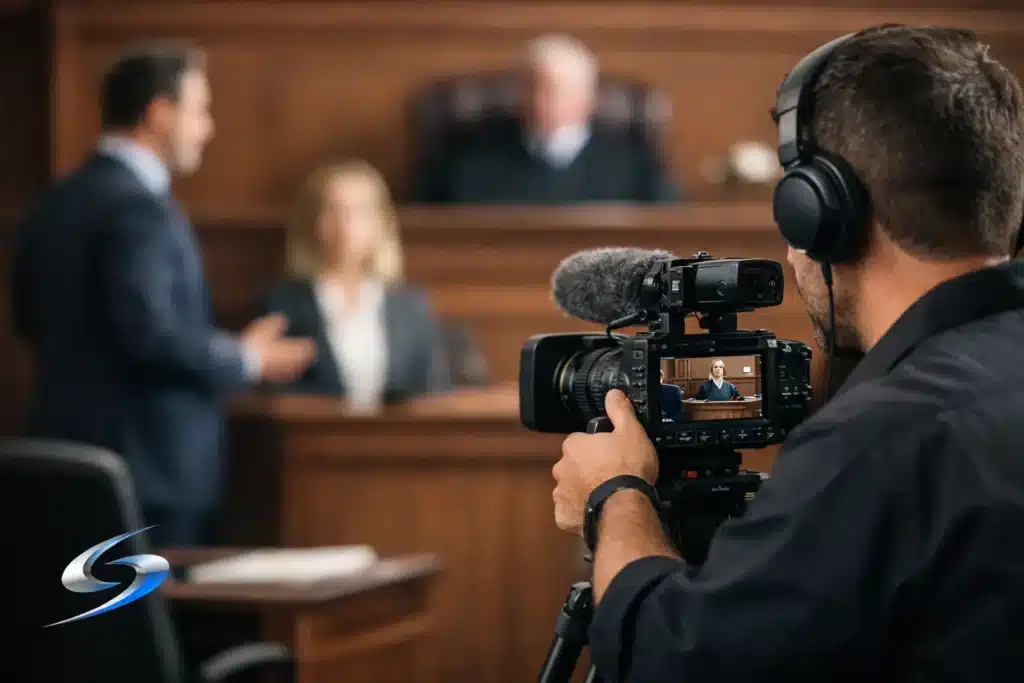
A deposition is not the time to find out that a camera operator does not understand exhibits, witness positioning, objections, or the importance of an uninterrupted record. If you are asking why hire certified legal videographer support instead of relying on a general video provider, the practical answer is simple: litigation video has to perform under scrutiny. It must be accurately captured, professionally managed, and ready when your team needs it.
Legal video is more than recording a person in a room or on a screen. It is part of the case record and may become a central tool for mediation, motion practice, settlement evaluation, or trial. A certified specialist brings the procedural awareness and production discipline needed to make that record useful.
Why Hire a Certified Legal Videographer?
Certification signals that the videographer has pursued specialized education and demonstrated knowledge specific to legal video work. That distinction matters because the technical decisions made before and during a deposition affect what counsel can use later.
A legal videographer understands that the assignment begins well before the witness is sworn. The room must be assessed for sound, sightlines, lighting, power, and the placement of attorneys, the court reporter, and remote participants. The videographer must also be prepared to identify the proceeding, capture appearances as appropriate, document exhibit handling, and maintain professional conduct without disrupting counsel’s process.
General video experience can be valuable, but it is not automatically litigation experience. A skilled event or corporate videographer may produce attractive footage while lacking familiarity with deposition protocol, transcript synchronization, or the exacting expectations of trial presentation. The trade-off is not about visual style. It is about whether the provider recognizes what can compromise a legal record before it becomes a problem.
A Clear, Reliable Record Is the First Priority
The most persuasive deposition clip still fails if the witness cannot be heard, the image is poorly framed, or the recording contains avoidable interruptions. Certified legal videographers approach audio and video quality as evidentiary concerns, not cosmetic preferences.
Audio deserves particular attention. Attorneys often focus on what a witness says, but playback depends on whether every answer, objection, and instruction can be heard clearly. HVAC noise, traffic, paper handling, distant microphones, and inconsistent remote connections can all interfere with intelligibility. An experienced legal video professional monitors sound throughout the proceeding rather than assuming equipment will take care of itself.
Video framing also has legal and strategic value. The witness should be plainly visible, consistently lit, and positioned in a way that supports accurate observation of testimony. Unnecessary camera movement, distracting backgrounds, or an overly wide shot can reduce the usefulness of the recording. The goal is not cinematic production. It is a stable, neutral, courtroom-ready presentation of the witness and the proceeding.
That standard applies to remote testimony as well. Zoom and hybrid depositions introduce different risks: unstable connections, inconsistent audio sources, screen-sharing issues, and uncertainty about how the witness is being recorded. A certified legal videographer can coordinate the technical setup, monitor the live proceeding, and create a more dependable record across in-person and remote formats.
Legal Procedure Changes the Way Video Must Be Managed
Legal proceedings have rhythms and rules that a specialized videographer learns to respect. Counsel may need to go off the record, confer privately, introduce exhibits, pause for technical reasons, or make a statement for the record. The videographer needs to respond promptly and appropriately without requiring repeated direction from the legal team.
This procedural fluency reduces friction during a deposition. Attorneys and paralegals should not have to explain basic legal-video workflow while managing a witness, opposing counsel, exhibits, and a tight schedule. A specialist knows when to remain unobtrusive, when to confirm the record, and when to raise a genuine technical concern before it affects the proceeding.
It also supports consistency across a case with multiple witnesses. When depositions occur over several days, in different locations, or through a mix of in-person and hybrid formats, consistent capture standards make later review and presentation easier. Your team is not left sorting through footage with different sound levels, framing, file conventions, or delivery methods.
Courtroom Preparation Starts at the Deposition
Many legal teams do not know which portions of a deposition will matter most until discovery has developed, motions have been decided, or trial themes have sharpened. That is why it is wise to treat deposition video as a future trial asset from the outset.
A certified legal videographer can support the next stage of work with services such as transcript synchronization and legal video editing. Synchronized video allows attorneys to review testimony alongside the transcript, locate key exchanges efficiently, and prepare designated clips with confidence. For a busy litigation team, that can save substantial time during witness preparation, mediation planning, and trial assembly.
Editing requires the same restraint and legal awareness as recording. Legal video edits should accurately reflect the testimony, preserve needed context, and follow counsel’s instructions. The purpose is to create clear, usable presentation material, not to alter the substance or create a dramatic effect that does not belong in the courtroom.
The exact deliverable depends on the matter. A short mediation presentation may call for selected testimony and supporting visuals. A trial team may need deposition designations assembled for courtroom playback. A personal injury case may require a day-in-the-life production that documents the real consequences of an injury with care and credibility. Each assignment benefits from a provider who understands the difference between producing video and producing legal video.
Certified Does Not Mean Hands-Off
Credentials are meaningful, but they are only one part of the decision. Legal teams should also look for responsiveness, current equipment, dependable backup practices, and a clear process for scheduling and delivery. A credential does not eliminate the need for attentive service, especially when a witness is out of state, a deposition shifts to Zoom, or a court deadline moves unexpectedly.
The strongest legal video partner combines technical competence with practical communication. They confirm logistics early, explain what is needed for the setup, coordinate smoothly with court reporters and counsel, and remain available when the matter changes. In litigation, small operational details can become large problems when they are discovered too late.
For Seattle-area firms and legal teams working throughout the Pacific Northwest, local experience can be particularly useful when proceedings involve courthouse logistics, law-office conference rooms, medical facilities, or witnesses connecting remotely from multiple locations. Royal Video Productions Inc. brings decades of legal-video focus to those assignments, with the goal of making complicated production requirements easier for counsel and staff to manage.
When Certification Matters Most
Not every matter requires the same level of production support. A short internal interview may not call for specialized legal video services. But certification and legal-specific experience become especially valuable when testimony may be used at trial, when the witness is significant or difficult to schedule again, when remote technology is involved, or when the case requires a polished presentation under deadline.
They also matter when there is little room for correction. A witness’s deposition may be the only opportunity to preserve testimony. A malfunctioning microphone, incomplete capture, or poorly managed remote session cannot always be repaired after the fact. Hiring the right professional is a way to protect the work your legal team has already invested in preparing for that moment.
Before booking a videographer, ask how they handle audio monitoring, hybrid connections, exhibit-related workflow, file delivery, transcript synchronization, and time-sensitive requests. The answers will tell you whether the provider understands the working realities of litigation or simply offers video as a general service.
When testimony may influence the direction of a case, the video record deserves the same deliberate preparation as the outline, exhibits, and witness strategy. Put a qualified legal video specialist in place early, and your team can stay focused on the testimony rather than the technology.