
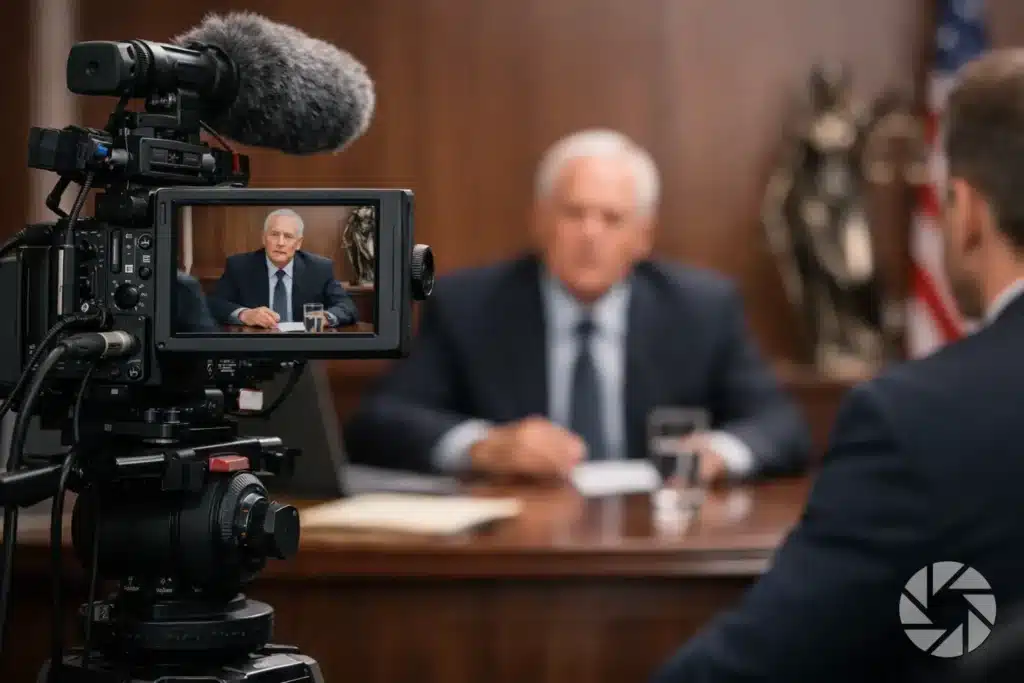
A deposition can be technically complete and still fail to serve the trial team well. Poor framing can hide a witness’s expression. Uneven audio can make testimony difficult to follow. A file that cannot be played reliably in court can create an avoidable distraction at the worst possible moment. Legal video production exists to prevent those problems before they reach mediation, trial preparation, or the courtroom.
For attorneys and legal support teams, video is not simply a recording. It is part of the litigation record and, in many matters, part of the case presentation. That changes the standard. The work must be accurate, organized, technically dependable, and responsive to the schedule that governs the case.
Legal Video Production Is Litigation Support
A legal videographer works within a setting where procedure matters as much as production quality. The goal is to create a clear, reliable record while minimizing disruption to counsel, witnesses, court reporters, and the proceeding itself.
That means understanding the practical differences between a deposition, a recorded statement, a day-in-the-life video, and a trial presentation. Each has a different purpose, audience, and level of editorial control. A deposition record should preserve testimony faithfully. A settlement presentation may need a concise, carefully organized narrative. A day-in-the-life production must document real circumstances without staging or overstating them.
The strongest legal video work is often unobtrusive. Counsel should be able to focus on questioning and strategy rather than camera angles, microphone placement, connection issues, or whether the final files will be ready when they are needed.
Start With the Litigation Purpose
The right production plan begins with a basic question: What does this video need to accomplish? That answer affects staffing, equipment, recording format, editing decisions, delivery specifications, and turnaround expectations.
Video depositions
A video deposition preserves more than spoken words. It captures pauses, demeanor, demonstratives, and the interaction between an attorney and witness. Proper lighting, clean audio, stable framing, and a professional on-record introduction all contribute to a usable record.
Deposition video also requires careful coordination. Counsel may be in one location, the witness in another, and the court reporter participating remotely. Exhibits may be introduced digitally. A reliable legal video team prepares for these variables instead of treating them as last-minute surprises.
Zoom and hybrid proceedings
Remote and hybrid depositions offer flexibility, but they also introduce risks that do not exist in a single conference room. A weak internet connection, unclear speaker audio, poor camera positioning, or confusion over exhibit handling can affect the usefulness of the record.
A professional setup should account for platform recording, local backup recording where appropriate, audio routing, participant views, and clear instructions for everyone involved. It should also establish who is managing the technology so attorneys are not forced to troubleshoot during testimony.
Not every matter needs the same approach. A short, low-complexity remote deposition may require straightforward support. A multi-party proceeding with interpreters, expert witnesses, extensive exhibits, or counsel appearing from several locations demands more advance planning and active monitoring.
Day-in-the-life and demonstrative video
Human-impact video can provide context that documents alone cannot convey. In personal injury matters, a day-in-the-life production may show the daily consequences of an injury, the support a family provides, and the practical limitations a person experiences.
The value comes from credibility. Footage should be authentic, respectful, and tied to the facts of the case. Overproduced music, dramatic editing, or scenes that feel staged can undermine a presentation that is meant to be persuasive because it is real.
Accident reconstruction support presents a separate need. Video may help organize site footage, vehicle damage, expert analysis, timing, sightlines, or animated demonstratives. The production team’s role is to execute a clear visual presentation while counsel and retained experts guide the legal and technical substance.
Plan the Record Before the Proceeding Begins
Most video problems are planning problems. A short pre-production conversation can establish the format of the proceeding, number of participants, locations, expected exhibits, required deliverables, and any court or jurisdiction-specific requirements.
It is also the time to identify logistical details that can affect the day. Will the room accommodate the camera position without interfering with counsel? Is there sufficient lighting? Will an interpreter need a dedicated microphone? Are remote participants joining from secure, quiet locations? Is a witness likely to use physical demonstratives that need to be visible on camera?
For Pacific Northwest legal teams handling matters across offices, homes, medical facilities, or neutral locations, advance coordination becomes particularly valuable. The videographer can arrive prepared with the right equipment and a plan that supports the proceeding rather than reshaping it.
Accuracy Comes Before Editing
Legal video editing is not the same as general corporate or promotional editing. In litigation, the question is not merely whether a piece looks polished. It is whether the edited work accurately reflects the underlying record and is appropriate for its intended use.
A deposition clip may need designations, objections, transcript references, exhibit callouts, or other elements directed by counsel. Editing must preserve continuity and avoid creating a misleading impression. Decisions about admissibility, designations, and substantive content remain with the legal team, but an experienced legal video provider understands the technical discipline required to carry those decisions into a courtroom-ready file.
Format matters, too. Trial teams may need files optimized for presentation software, high-resolution playback, secure review, or archival use. A file that plays perfectly on one laptop is not automatically ready for a courtroom system. Testing playback and supplying organized deliverables can save valuable time during trial preparation.
Transcript Synchronization Makes Testimony Easier to Use
When deposition video is synchronized to the certified transcript, attorneys can move quickly from text to the corresponding video segment. This is especially useful when preparing designations, evaluating witness performance, building impeachment material, or assembling clips for mediation and trial.
The benefit is efficiency, but precision is the foundation. Synchronization should align the spoken testimony with the transcript accurately enough for counsel to locate and review material with confidence. Clear file naming, organized folders, and predictable deliverables matter here as much as the synchronization itself.
For cases with numerous depositions, this organization can reduce friction across the entire legal team. Attorneys, paralegals, and trial consultants can work from a consistent set of materials rather than searching through disconnected files and timestamps.
What to Expect From a Legal Video Partner
Specialized legal video service should feel controlled, responsive, and straightforward. The provider should understand legal schedules, confirm details early, communicate clearly, and deliver work in a form that supports the next stage of the case.
Experience matters because legal proceedings rarely follow a perfect script. A witness may appear late. A remote participant may lose connection. Counsel may need an additional copy, a revised clip list, or expedited delivery before a hearing. The right response is not panic or improvisation. It is a calm, informed process that protects the record and keeps the legal team moving.
At Royal Video Productions, that approach is built around decades of legal-video experience, attentive service, and production standards designed for litigation rather than general business video. The objective is simple: give attorneys dependable visual evidence and presentation support without adding another operational burden to the case.
Build Video Into Trial Preparation Early
Video is most effective when it is considered early enough to shape preparation, not merely added at the deadline. Identifying key witnesses, anticipated demonstratives, remote testimony needs, and likely presentation formats well before trial gives the legal team more options and fewer compromises.
Court rules, judicial preferences, and case-specific evidentiary issues can affect what may be shown and how it should be prepared. Counsel should make those legal determinations early, then provide clear direction to the production team. With that alignment in place, legal video becomes what it should be: a precise, credible tool that helps the facts be seen and heard clearly when it matters most.