
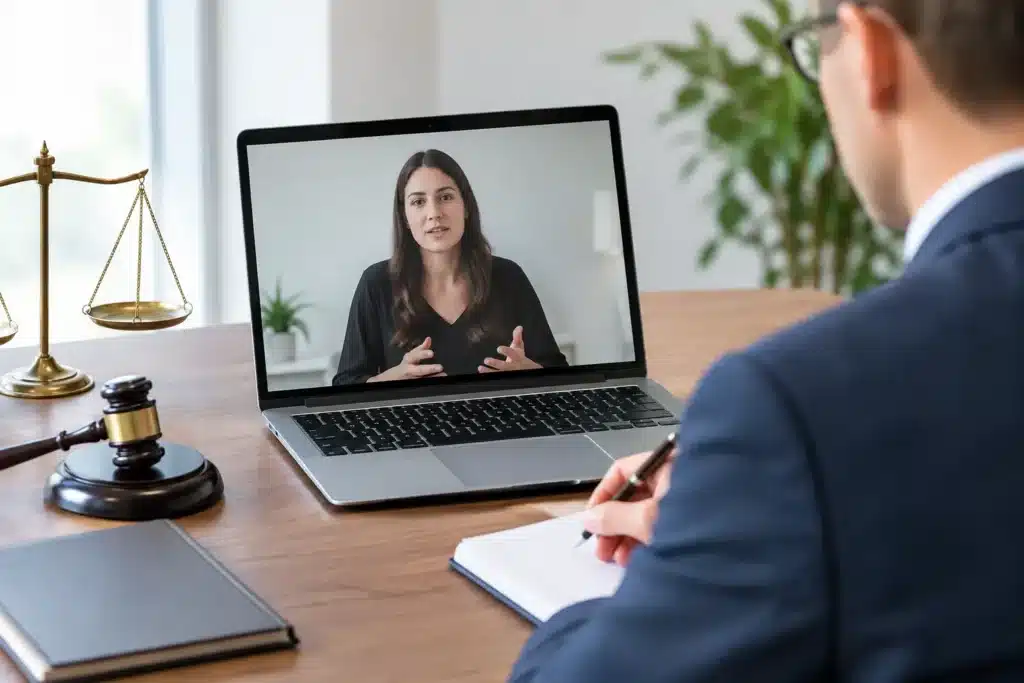
A witness may be available for only one afternoon, located several states away, or facing medical limitations that make later live testimony uncertain. In those moments, knowing how to obtain video testimony is not simply a production question. It is a litigation-planning decision that affects scheduling, witness presentation, discovery, and trial readiness.
For most matters, video testimony is obtained through a properly noticed video deposition. The process requires more than turning on a camera or opening a video-conferencing platform. Counsel must coordinate the legal procedure, the court reporter, the witness, opposing counsel, and a legal videographer who understands the record being created. When those pieces are managed correctly, the result is testimony that is clear, dependable, and usable when the case reaches mediation, motion practice, or trial.
Start With the Purpose of the Testimony
Before scheduling anything, identify why the video record is needed. A discovery deposition, preservation deposition, trial deposition, expert deposition, and video declaration each serve different purposes. The intended use influences the notice, scope of examination, setup, and post-production requirements.
A discovery deposition may be recorded because witness demeanor and exact phrasing could become important later. A preservation deposition may be necessary where a witness is ill, elderly, outside subpoena range, or otherwise unlikely to appear at trial. Expert testimony may need video support when schedules are tight or when the expert’s explanation benefits from demonstratives.
This distinction matters because not every recorded witness interview is courtroom-ready testimony. An informal recorded statement can be useful for case investigation, but it does not automatically satisfy procedural requirements for deposition use. Confirm the applicable rules, orders, and stipulations before treating any recording as evidence that can be presented to a fact finder.
How to Obtain Video Testimony Through a Deposition
The most reliable approach is to build video into the deposition plan from the beginning. Give formal notice that the deposition will be video recorded, identify the method of recording as required, and coordinate with the court reporter and legal video provider early. Last-minute requests can be accommodated in some circumstances, but they leave less room to resolve location, connectivity, exhibit, and attendance issues.
In Washington and throughout the Pacific Northwest, attorneys often need to coordinate in-person, remote, and hybrid participants. A witness may sit with counsel in one location while examining attorneys, insurers, experts, or interpreters attend remotely. The technology can support that arrangement well, provided the process is controlled by professionals who understand deposition protocol.
The videographer should capture a clear image of the witness, intelligible audio, and the necessary verbal identifications at the start of the proceeding. The record should establish the date, location or remote appearance arrangement, case caption, witness identity, and those present. These details may seem routine, but they help preserve clarity when the footage is reviewed months or years later.
Select the Right Format: In Person, Remote, or Hybrid
An in-person video deposition generally offers the greatest control over lighting, audio, camera framing, and exhibit handling. It is often the best choice for key fact witnesses, emotionally significant testimony, complex expert opinions, or any examination likely to be used at trial. A professional setup can show demeanor without distracting shadows, poor sound, or an unflattering camera angle.
Remote depositions can reduce travel and make scheduling easier. They are particularly effective for routine testimony, out-of-area witnesses, and matters involving multiple counsel. The trade-off is that remote proceedings depend on the witness’s internet connection, device, surroundings, and ability to handle electronic exhibits. A professional legal video team can manage the virtual room, monitor recording quality, and respond quickly when technical problems arise.
A hybrid deposition combines the two. For example, the witness, court reporter, and videographer may be together in a conference room while counsel joins remotely. This format often delivers stronger production quality than a fully remote session while preserving flexibility for participants who cannot travel.
Prepare the Witness for the Camera and the Record
Witness preparation should include more than substantive testimony. A witness who understands the pace and mechanics of a video deposition is less likely to create an unclear record.
Explain that audible responses matter. Nodding, shaking the head, or pointing to an exhibit may be understood in the room, but the transcript and video record require verbal answers. The witness should pause briefly after a question, avoid speaking over counsel, and ask for clarification rather than guessing at an unclear question.
For remote testimony, the witness should use a quiet, private room with stable internet, a charged device, and a neutral background. Headphones may improve audio in some settings, although counsel should consider the preferences and requirements of all parties before the deposition begins. The witness should also understand that private communications during testimony are restricted by the applicable rules and instructions on the record.
Camera positioning deserves practical attention. The witness should be framed at eye level, with adequate light on the face and no bright window behind them. These are not cosmetic concerns. Poor lighting or muffled audio can make important testimony harder to evaluate and less persuasive when presented later.
Coordinate Exhibits Before the Deposition Begins
Exhibits are one of the most common sources of delay in remote and hybrid testimony. Determine in advance whether documents will be marked physically, exchanged electronically, displayed through a deposition platform, or managed by a designated exhibit technician.
For a short deposition with few documents, a straightforward digital exhibit process may be sufficient. For a complex matter involving medical records, construction plans, spreadsheets, photographs, or expert demonstratives, a more deliberate workflow is warranted. Counsel should be able to direct the witness to the correct document without losing time, confusing the record, or revealing materials prematurely.
If a witness needs to annotate an exhibit, decide how that annotation will be preserved. If video testimony will later be shown alongside exhibits, discuss that need before the deposition. Proper planning makes it easier to create clips or synchronized playback that accurately pairs the spoken testimony with the referenced material.
Protect the Quality and Integrity of the Recording
Legal video is different from a general business recording. The goal is to preserve testimony faithfully, not to create a promotional video or an edited presentation of the witness. A qualified legal videographer uses appropriate equipment, monitors sound continuously, maintains a stable image, and follows the procedures necessary to create a dependable record.
The original recording and any copies should be handled carefully. Maintain clear records of delivery, storage, and requested edits. Avoid informal trimming, reposting, or converting files in ways that could raise questions about completeness or authenticity. If excerpts will be used for mediation or trial, work from the authorized source and retain the full recording.
Courtroom use may also require specific formatting, clip designations, objection rulings, and transcript synchronization. These steps are best addressed well before the final pretrial deadline. A rushed edit can create avoidable problems, especially where multiple designations, counter-designations, or exhibit callouts must be incorporated.
Plan for the Deliverables You Will Need Later
Do not wait until trial preparation to ask what files are available. At the time of booking, identify whether the legal team may need the full video, a secure digital delivery file, transcript synchronization, deposition clips, still images, or courtroom playback support.
Transcript synchronization can be particularly valuable for lengthy depositions. It allows counsel to locate testimony by text, verify context quickly, and prepare focused clips for hearings or trial. It also supports more efficient internal review when multiple attorneys or experts need to examine the same record.
Editing must preserve accuracy. A trial clip should reflect the designated testimony, associated objections and rulings, and the context required by the court. It should not alter the substance, sequence, or meaning of what the witness said. The strongest legal video work is often invisible: the judge and jury focus on the testimony because the playback is clean, readable, and reliable.
Build Time Into the Litigation Calendar
The best time to arrange legal video support is when the deposition date is being considered, not the day before it occurs. Early coordination gives the legal team more options for locations, remote access, exhibit management, and post-production. It also helps account for court deadlines, witness availability, and the time needed to review the transcript before creating trial designations.
For high-stakes or time-sensitive matters, confirm who will handle each task: noticing the deposition, securing the witness, booking the reporter, arranging the videographer, distributing connection information, managing exhibits, and ordering final deliverables. A simple division of responsibility prevents the familiar last-minute question of whether the testimony was actually recorded in the format the case requires.
Royal Video Productions works with legal teams that need experienced support for video depositions, hybrid proceedings, synchronized transcripts, and courtroom-ready playback. The objective is straightforward: reduce the production burden on counsel while protecting the quality of the record.
When testimony may matter months from now, treat the recording as part of the case strategy from the first scheduling call. A well-managed video deposition gives counsel more than a file – it preserves a witness’s words, demeanor, and evidence in a form the legal team can use with confidence.