
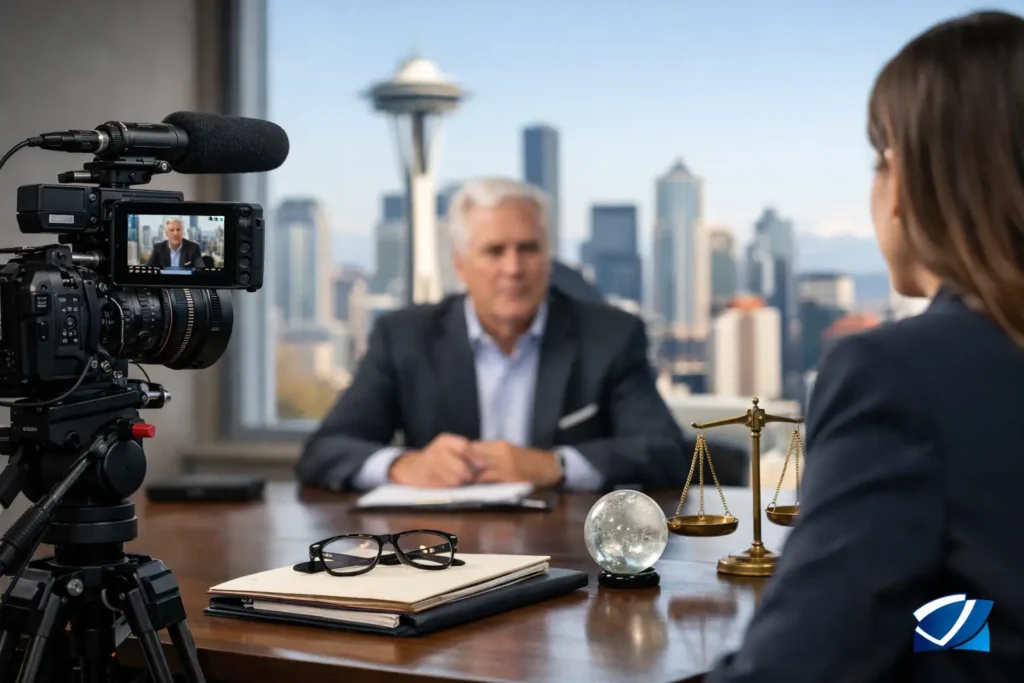
A deposition can be taken without video, yet a written transcript cannot preserve the pause before an answer, the witness’s demeanor, or the clarity of a demonstrative being discussed on the record. Selecting a deposition videographer in Seattle is therefore more than a scheduling task. It is a decision about the quality, usability, and reliability of testimony that may later matter in mediation, motion practice, or trial.
For Seattle-area legal teams, the best choice is a legal video specialist who understands deposition procedure, anticipates technical issues, and works with the pace of litigation rather than adding another item to manage. The camera is only one part of the assignment. Accurate capture, professional conduct, secure handling, and timely delivery all affect whether the video is useful when the case reaches its next deadline.
What a Deposition Videographer in Seattle Actually Does
A professional legal videographer creates a clear visual and audio record of sworn testimony while operating within the expectations of counsel, the court reporter, and the deposition notice. That means arriving prepared, establishing the recording correctly, monitoring audio throughout the proceeding, and documenting the record in a manner appropriate for legal use.
The work requires more than general event-video experience. Depositions have formal starts and stops, exhibit discussions, objections, off-the-record conversations, interpreter needs, and witness adjustments that must be handled without disrupting the proceeding. A legal video professional knows when to remain unobtrusive and when a technical issue needs immediate attention before valuable testimony is lost.
The finished deliverable must also be practical for the legal team. Depending on the matter, that may include a standard deposition video, a synchronized video and transcript package, edited clips for mediation or trial, or a format suitable for courtroom playback. The objective is not merely to record the day. It is to preserve testimony in a form counsel can locate, review, and present effectively.
Why Legal-Specific Experience Matters
A deposition setting leaves little room for preventable mistakes. Poor microphone placement, background noise, inconsistent framing, or a recording interruption can distract from the witness and create avoidable problems in review. A specialist approaches the assignment with legal procedure and evidentiary presentation in mind.
That experience also shows in communication. Attorneys and paralegals should not need to explain basic deposition logistics to their video provider. A seasoned videographer can coordinate respectfully with the court reporter, confirm the location or virtual platform details, and adapt to the practical realities of a conference room, law office, hotel suite, or remote witness location.
It also matters after the deposition ends. Litigation schedules can change quickly, and a video that is technically complete but unavailable when counsel needs it does not solve the problem. Reliable turnaround and responsive support are especially valuable when a deposition is followed by a dispositive motion, mediation, expert preparation, or trial designation deadline.
Video Depositions Are Not One-Size-Fits-All
The right setup depends on how testimony will be used and where participants are located. An in-person deposition may call for a straightforward professional recording with clear witness framing and clean audio. A matter involving complex exhibits, multiple parties, or expected trial use may benefit from advance planning around demonstratives, presentation needs, and synchronized transcript production.
Hybrid and remote depositions introduce a different set of considerations. A witness may be in one location, counsel in another, and the court reporter working remotely. The videographer must help create an organized record despite differences in internet connections, cameras, microphones, lighting, and platform controls. The goal is not to make the deposition look like a broadcast. It is to ensure participants can hear, see, and preserve the testimony clearly.
There are trade-offs. Remote participation can reduce travel and simplify scheduling, but it can also introduce connection instability and reduce control over the witness environment. For critical testimony, legal teams may decide that an on-site video professional provides greater consistency. In other cases, a well-managed Zoom or hybrid deposition is the most efficient option. The appropriate choice depends on the witness, the issues, the anticipated use of the testimony, and the case schedule.
Planning Before the Record Begins
The strongest video depositions are planned before anyone is sworn in. A brief advance conversation can identify the deposition date, location, expected duration, number of participants, remote attendees, interpreter requirements, exhibit needs, and requested deliverables. These details allow the video team to bring the right equipment and allow counsel to avoid last-minute technical decisions.
Location is especially important. A small room with hard surfaces, HVAC noise, poor lighting, or frequent interruptions can affect the final recording. A legal videographer can work within imperfect conditions, but advance notice makes it easier to position equipment effectively and identify practical solutions. In a virtual setting, early testing of the witness connection and audio setup is often worthwhile, particularly when testimony is central to the case.
Legal teams should also clarify how quickly they may need the video and whether post-production is anticipated. If counsel expects to use selected testimony at mediation or trial, identifying that need early helps establish a realistic workflow for review, transcript synchronization, clip creation, and final delivery.
The Value of Synchronized Video and Transcript
Synchronized video links the deposition recording to the written transcript, allowing users to move directly to the corresponding video as they review testimony. For attorneys preparing examinations, motions, or designations, this can significantly reduce the time spent searching through hours of footage.
The benefit is most apparent when a witness’s delivery matters. A transcript can identify the words, but it cannot fully communicate an extended pause, a change in tone, an evasive response, or a confident admission. With synchronized video, counsel can evaluate both the language and the presentation of the testimony in context.
It is also useful for collaboration. A trial team may need to identify clips, communicate with co-counsel, prepare a presentation, or compare testimony across witnesses. When video and text work together, that review process becomes more efficient and more precise. The final presentation still depends on case strategy and applicable court requirements, but organized source material gives the team a better foundation.
Editing for Mediation, Trial, and Case Presentation
Legal video editing is not about dramatic effects. Its value is in restraint, accuracy, and usability. A properly prepared clip should preserve the intended testimony, reflect the record faithfully, and play cleanly in the setting where counsel needs it.
For mediation, carefully selected testimony can help decision-makers understand a witness’s account without requiring them to absorb an entire deposition. For trial preparation, edited designations and synchronized playback can help counsel organize presentation materials well before the courtroom deadline. In personal injury and liability matters, deposition footage may also work alongside day-in-the-life video, accident reconstruction support, photographs, documents, and other demonstrative evidence.
Editing should begin with a clear purpose. A short clip intended to establish a key admission has different needs than a longer sequence intended to show a pattern of answers. Counsel should provide the legal direction; the video professional should provide the technical discipline needed to create a polished, dependable deliverable.
Choosing a Seattle Deposition Videographer
When evaluating a provider, look beyond camera equipment. Ask whether the videographer specializes in legal video, regularly supports remote and hybrid proceedings, understands transcript synchronization, and can respond to compressed litigation timelines. Experience with courtroom-oriented deliverables matters because the technical choices made during recording affect what can be done later.
Responsiveness deserves equal attention. Depositions are frequently noticed, moved, extended, or converted from in-person to remote formats with little lead time. A provider who communicates clearly, confirms details, and remains available when plans change reduces the administrative burden on attorneys and staff.
Royal Video Productions Inc. serves the greater Seattle legal community from Issaquah with specialized support for video depositions, hybrid proceedings, transcript synchronization, legal editing, and custom litigation presentations. Its work is led by Certified Legal Video Specialist Eric Jensen, bringing decades of focused legal-video experience to assignments where accuracy and timing are essential.
Before your next deposition is confirmed, consider how the testimony may be used six months from now, not only how it will be taken tomorrow. Planning the video record with that future use in mind gives your team more options when the case demands them.