
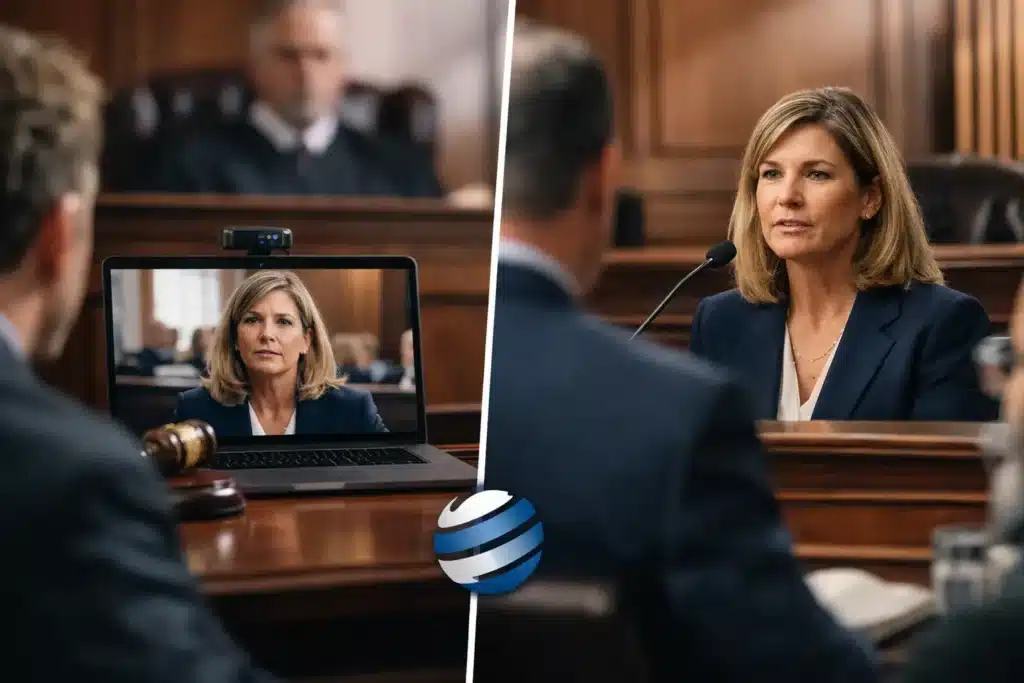
A witness who cannot return for trial can turn a straightforward scheduling problem into a case-shaping decision. In the video testimony vs live testimony question, the better format is rarely the one that looks best in the abstract. It is the one that preserves the most useful testimony, fits the procedural posture of the case, and can be presented clearly when the stakes are highest.
For Seattle-area litigators, that decision often arises well before trial. A deposition may be taken with possible playback in mind. A remote witness may require a hybrid setup. A key damages witness may be available only once. The legal team needs more than a recording – it needs a reliable record that supports examination, objections, designations, and courtroom presentation.
What Changes When Testimony Is on Video
Video captures information a written transcript cannot fully convey: pauses before an answer, a witness’s pace, changes in expression, and the physical confidence or uncertainty behind a response. Those details can give a judge, jury, mediator, or opposing counsel a fuller sense of the testimony.
That does not mean video automatically makes testimony more persuasive. Camera framing, audio quality, lighting, room setup, and the witness’s demeanor all affect how the testimony is received. A poorly produced deposition can distract from otherwise valuable evidence. A professionally recorded legal video deposition, by contrast, gives the court a clear, stable presentation of the witness and the record.
Video also provides practical flexibility. When a witness is unavailable, out of state, medically limited, or difficult to coordinate for trial, designated deposition testimony may preserve evidence that would otherwise be difficult to present. This can be particularly significant in personal injury matters, liability disputes, expert testimony, and cases where schedules shift as trial approaches.
The strength of a preserved record
A video deposition can preserve a witness at a specific point in time. That may matter when recollections are fresh, a condition is changing, or a witness’s availability is uncertain. It also allows counsel to prepare clips that correspond to deposition designations, subject to the applicable rules and the court’s rulings.
The record must be handled carefully. Audio needs to be intelligible. Exhibits need to be introduced and identified accurately. The camera must capture the witness without interfering with counsel, the court reporter, or the examination. Those production details are not cosmetic. They affect whether testimony is easy to review, use, and play back under courtroom conditions.
Where Live Testimony Still Has the Advantage
Live testimony gives counsel the ability to respond in real time. Direct examination can be adjusted to the witness’s answers. Cross-examination can follow an unexpected statement. The judge can address an issue as it occurs, and the jury sees the witness participating in the proceedings rather than appearing on a screen.
For a central fact witness whose credibility is likely to be contested, live appearance may carry particular strategic value. The attorney can establish rapport, clarify confusing points immediately, and make decisions based on the witness’s performance in the courtroom. No deposition clip can reproduce every benefit of real-time examination.
Live testimony also avoids some of the limits of edited or designated video. Even when video excerpts are properly prepared, they may feel more segmented than a witness answering questions continuously in the courtroom. Jurors may need context that falls outside a selected clip, and counsel may need the freedom to develop testimony in a direction that was not apparent during deposition.
Still, live testimony is not free of operational risk. Travel delays, illness, work demands, and last-minute availability issues can disrupt a trial schedule. A witness who is uncomfortable in a courtroom may also perform differently from the way they did in a controlled deposition setting. The decision should account for those realities rather than assuming that live testimony will always be more compelling.
Video Testimony vs Live Testimony: The Decision Factors
The most useful comparison starts with the role of the witness. Is this testimony foundational, technical, emotionally significant, or central to liability? Is the witness likely to be available when trial begins? Will the testimony depend on documents, demonstratives, or exhibits that need to be shown clearly? The answers help determine whether preservation, flexibility, or live examination deserves the most weight.
Credibility is another factor, but it should be evaluated with care. A strong witness may be effective in either format. A witness who is evasive, inconsistent, or visually expressive may be more persuasive on video than in a transcript alone, whether that helps or hurts the party offering the testimony. Conversely, a calm expert explaining a technical opinion may benefit from live interaction and the ability to clarify questions from counsel or the court.
Timing matters as well. If testimony may be used at mediation, in motion practice, or at trial, the recording should be produced with those potential uses in mind from the start. Attempting to repair poor audio, awkward framing, or missing exhibit coverage later is far more difficult than establishing the right production standards before the deposition begins.
Consider the courtroom playback plan early
Counsel should not wait until trial week to consider how video will be used. Designations, objections, editing, transcript synchronization, and final playback files require coordination. Courtroom technology also varies. A file that plays well on an office computer is not necessarily ready for use in court.
Transcript synchronization can make review and presentation substantially more efficient. It allows the written record to follow the video, helping counsel locate key testimony and helping fact finders follow complex testimony. For lengthy expert depositions, medical discussions, or technical evidence, that additional clarity can be valuable.
At Royal Video Productions, legal video work is planned around the actual demands of litigation: clean capture, responsive coordination, and deliverables that support review and courtroom presentation. That preparation is especially helpful when deposition footage may need to move quickly from a scheduling necessity to a trial-ready asset.
Remote and Hybrid Testimony Require More Preparation
Zoom and hybrid depositions can solve genuine access problems, but they introduce variables that do not exist in a traditional in-person setup. Internet stability, microphone quality, camera placement, witness environment, exhibit workflow, and communication among participants all need attention. A remote witness appearing through a laptop camera may technically be visible while still being difficult to hear or assess.
The issue is not whether remote testimony is acceptable in every circumstance. It is whether the format matches the importance of the testimony and the practical needs of the matter. For a brief witness with limited foundational testimony, remote capture may be entirely appropriate. For a high-value expert or a witness whose demeanor will be central, an in-person or carefully managed hybrid approach may offer more control.
A pre-session check should confirm the witness’s framing, lighting, audio, connection, and access to exhibits. It should also clarify the responsibilities of counsel, the court reporter, and the video professional. Small technical problems become expensive interruptions when several attorneys, a witness, and a court reporter are waiting.
Build the Record for the Use You May Need Later
The strongest approach is often not choosing video instead of live testimony. It is using video strategically to preserve options while preparing for live testimony where it offers the greatest value. A professionally recorded deposition can protect against witness unavailability while giving counsel a usable presentation alternative. Live trial appearance can then remain the preferred plan when circumstances allow.
That approach requires early communication. Tell the legal video professional whether the deposition may be used for trial, whether a remote participant is expected, whether synchronized video will be needed, and whether exhibits or demonstratives require special handling. Those decisions affect setup, staffing, file preparation, and turnaround expectations.
The right testimony format is the one that protects the record and serves the case, not simply the one that is easiest to schedule. When the production plan reflects the witness, the evidence, and the courtroom objective from the beginning, counsel retains more choices when trial preparation becomes urgent.