
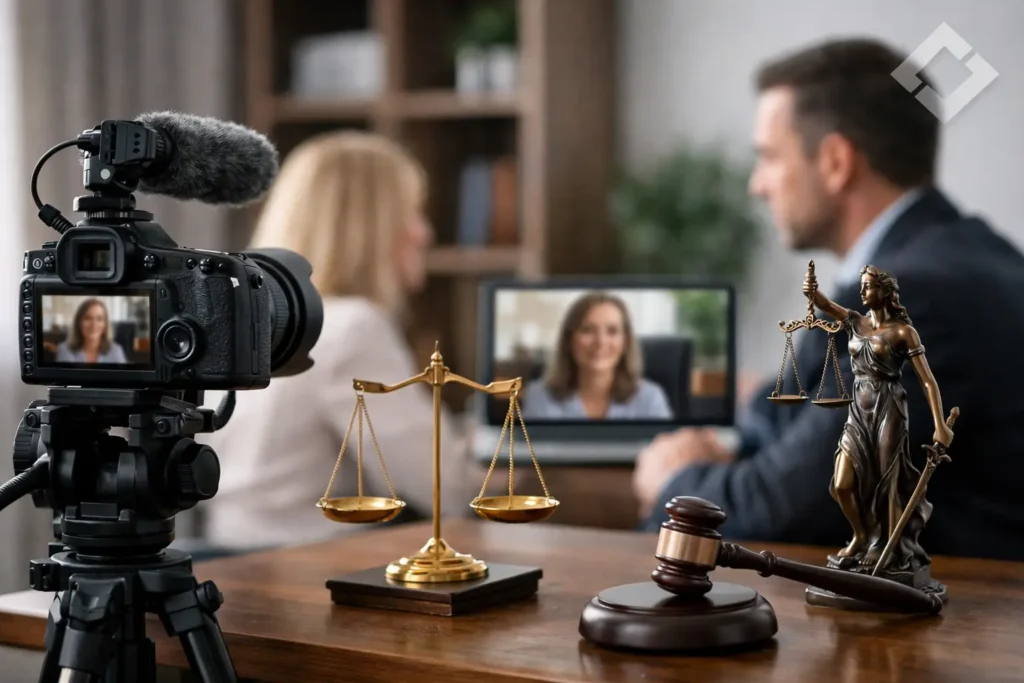
A mediation brief can explain that a client can no longer climb stairs, work a full shift, or care for a child without help. A well-produced settlement video can show those facts in a matter of minutes. That is the central question behind when should lawyers use settlement videos: whether the case will be better understood when decision-makers can see the human and practical consequences of the dispute rather than simply read about them.
Settlement videos are not appropriate for every matter. They are most effective when they solve a communication problem that pleadings, records, photographs, and expert reports have not fully solved. For personal injury and wrongful death matters in particular, a carefully planned video can give the mediator, insurer, opposing counsel, or claims representative a more complete and credible view of damages before negotiations reach an impasse.
When Should Lawyers Use Settlement Videos?
Lawyers should consider a settlement video when the value of the case depends on facts that are difficult to convey on paper. Functional limitations, chronic pain, caregiving needs, home modifications, lost independence, and the disruption of a family’s daily routines are often real but abstract in medical records. The goal is not to manufacture emotion. It is to document relevant facts in a format that is direct, accurate, and difficult to misunderstand.
A settlement video may be especially useful when the person with decision-making authority has not met the client or visited the locations central to the claim. An insurer may receive a file containing thousands of pages of records and a demand package prepared months earlier. A concise video can focus attention on the evidence that matters most and make the damages discussion more concrete before mediation.
Timing matters. Producing a video too early can create problems if treatment, prognosis, or liability facts are still changing. Waiting until the eve of mediation can also limit the time available to review footage, make strategic edits, and deliver a polished presentation. The strongest window is often after the key medical, vocational, and liability information is developed, but before settlement positions harden.
The Cases That Benefit Most
A day-in-the-life approach is frequently appropriate in serious injury cases involving lasting limitations. It can document morning routines, mobility challenges, therapy, appointments, adaptive equipment, and the assistance required from family members or professional caregivers. The video should reflect an ordinary day, not an artificially dramatic one. Credibility comes from showing the reality of the client’s life with restraint and precision.
Cases involving traumatic brain injury, spinal injury, amputations, burn injuries, chronic pain, and significant orthopedic limitations often benefit from visual documentation. So can claims involving a child whose future needs are difficult to reduce to a chart or calculation. In each instance, the video helps connect medical terminology to practical consequences.
Wrongful death cases present a different but equally compelling use. Family members can explain the role the deceased played in the household, business, and community. Photographs, home video, and interviews may help establish the depth of the loss. The production must be handled with particular care. A respectful presentation can humanize the case; an overly sentimental one can distract from the evidence and reduce its persuasive force.
Settlement videos can also help in liability disputes. A site visit, vehicle inspection, incident reconstruction, or carefully edited sequence of surveillance footage may clarify sight lines, distances, conditions, or the sequence of events. Where parties disagree about what happened, visual evidence can give the mediator a clearer foundation for evaluating risk.
What a Settlement Video Should Accomplish
The best settlement videos are built around a litigation objective, not a production checklist. Before filming begins, counsel should identify the exact gap the video needs to close. Is the goal to explain the client’s daily limitations? Demonstrate how an incident occurred? Show why future care is necessary? Establish the practical effect of a permanent injury on work and family life?
That objective should guide every production decision. Interviews may be appropriate when a client, family member, treating provider, vocational professional, or other witness can offer firsthand information. Location footage may matter when the home, workplace, roadway, or care setting provides context. Medical imaging, records, still photographs, and demonstrative graphics can be incorporated when they improve understanding without overwhelming the viewer.
A settlement video should be concise enough to hold attention but complete enough to support the requested value. There is no universal running time. A straightforward presentation of a limited issue may require only a few minutes. A complex catastrophic-injury matter may require more. The right length depends on the audience, the evidence, and whether the video will be viewed during mediation, sent in advance, or used as part of a broader settlement package.
Credibility Is the Deciding Factor
The strategic value of a settlement video rises or falls on credibility. Sophisticated mediators, adjusters, and defense counsel recognize advocacy. They also recognize when a presentation has been exaggerated, selectively framed, or produced without regard for the evidentiary record.
For that reason, counsel should avoid staging activities that do not reflect the client’s normal routine. Editing should improve clarity, not alter meaning. Statements should be grounded in personal knowledge or supported by the case record. If a medical provider appears, the attorney should consider the provider’s role, the scope of any opinions offered, and the procedural requirements that may apply.
A professional legal video team understands that visual polish and evidentiary discipline are not competing goals. Clean audio, stable images, accurate identification, and thoughtful pacing help the viewer focus on the facts. They also signal that the legal team has prepared the matter carefully. At Royal Video Productions, that standard includes producing courtroom-ready work that supports the attorney’s strategy while respecting the demands of litigation.
Plan for Discovery and Settlement Confidentiality
Before using a settlement video, lawyers should consider how it may be characterized and exchanged. A video created for negotiation may still include factual material, witness statements, or expert-related content that raises discovery questions. The answer depends on the jurisdiction, the timing of the production, the intended use, and the applicable rules or orders in the case.
Counsel should decide in advance whether the video will be shown only in mediation, delivered to opposing counsel, included with a demand, or reserved for another settlement discussion. The production process should also account for permissions, releases, protected health information, and any confidentiality obligations. This is particularly important when filming in medical facilities, schools, workplaces, or private homes.
The point is not to let procedural uncertainty prevent useful advocacy. It is to involve the right legal analysis before the camera rolls. A production team can manage the technical and logistical details, but attorneys should control the legal scope and strategic distribution of the final piece.
How to Prepare for a Productive Shoot
A settlement video works best when it is planned like any other important litigation presentation. Start with a short strategy discussion that identifies the intended audience, key messages, relevant witnesses, locations, and deadline. This helps determine whether the project calls for a day-in-the-life production, an interview-based presentation, accident reconstruction support, edited deposition clips, or a combination of formats.
The legal team should provide the producer with a focused factual outline, not simply the entire case file. Useful materials may include a timeline, medical summaries, photographs, relevant records, deposition designations, and a list of points that must be addressed. The producer should understand the case theory, while counsel remains responsible for deciding what belongs in the final presentation.
It is also wise to prepare the client and family members for the practical realities of filming. They should not be coached to perform or given words to recite. They should understand the schedule, the purpose of the production, and the importance of being natural and accurate. That preparation reduces stress and results in more reliable footage.
Use Video Before the Number Becomes Fixed
Settlement videos are most valuable when they reach decision-makers early enough to influence the evaluation of the claim. If a carrier has already assigned a low reserve based on an incomplete paper record, the video may help reset the conversation. If mediation is approaching and the parties disagree sharply about damages, it can give the mediator a shared factual reference point.
Still, video is not a substitute for sound case preparation. It cannot cure weak liability evidence, unsupported medical causation, or an undeveloped damages claim. It is a force multiplier when the underlying evidence is strong and the challenge is making that evidence understandable.
The helpful question is not whether a settlement video will make a case more emotional. Ask whether it will make the case more accurate, more immediate, and easier for the people at the negotiating table to evaluate. When the answer is yes, a disciplined legal video production can help move a serious settlement discussion forward.