
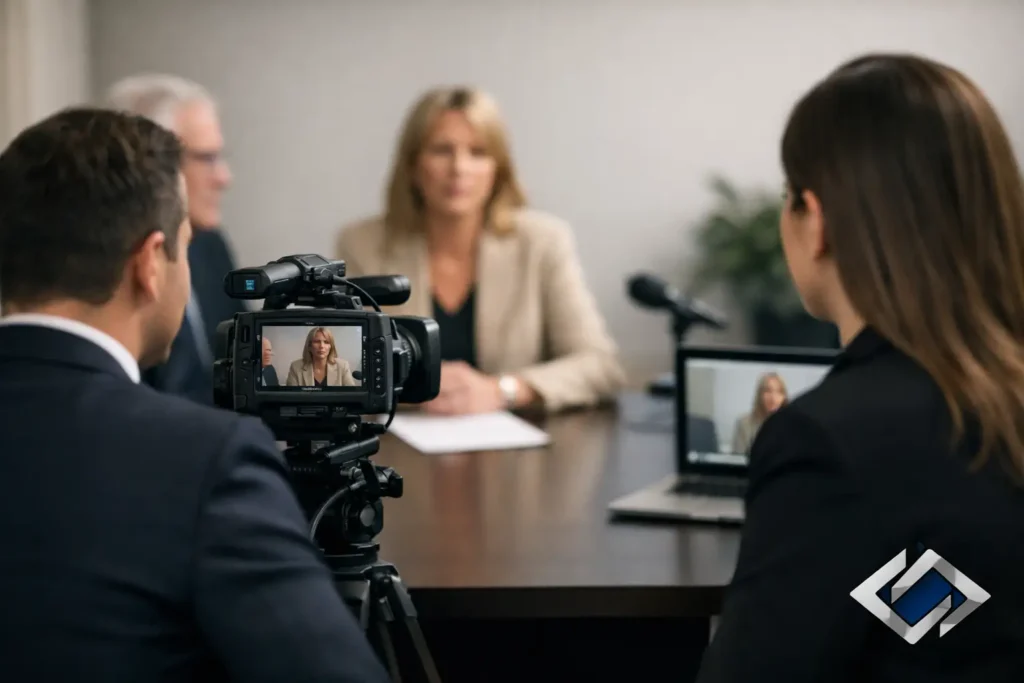
A witness may be available for a deposition today yet unavailable, unconvincing, or difficult to present months later at trial. That is where the question, “when should attorneys use video depositions?” becomes a case-strategy decision, not merely a scheduling decision. A properly recorded deposition preserves more than words on a page. It captures delivery, pauses, confidence, hesitation, and the human context that can affect how testimony is received.
For litigators, video is most effective when it is selected with a clear purpose and produced with courtroom use in mind. It should support the theory of the case, reduce risk around critical testimony, or give the legal team a stronger tool for mediation, trial preparation, and presentation.
When Should Attorneys Use Video Depositions?
Attorneys should consider video depositions when testimony may need to be presented outside the deposition room, when a witness’s manner is material, or when preserving testimony is essential to the case. The decision depends on the witness, the forum, the anticipated evidentiary issues, and the practical realities of trial.
A transcript remains indispensable. It is searchable, quotable, and central to motion practice. But it cannot show whether a witness gave a direct answer after a long pause, became visibly uncertain, or used a dismissive tone when discussing a serious injury. Video gives counsel and the fact finder a fuller record of what occurred.
That advantage is not universal. Some testimony is routine, narrowly procedural, or unlikely to be used beyond discovery. In those matters, the added production planning may not serve a meaningful purpose. The strongest approach is to identify the depositions where visual testimony could change how the evidence is evaluated.
Preserve Testimony From Witnesses Who May Not Appear at Trial
Preservation is one of the clearest reasons to record a deposition. A witness may be elderly, seriously ill, outside the court’s subpoena power, relocating, deployed, or otherwise uncertain to appear when the case reaches trial. Expert witnesses also face demanding schedules that can complicate live testimony.
Video helps preserve the witness’s testimony in a format a judge or jury can see and hear. That can be particularly valuable when the witness has direct knowledge of a disputed event, treatment, business practice, or condition that cannot be effectively recreated through another source.
Counsel should address applicable court rules, notice requirements, objections, and any stipulations early. A professionally recorded deposition is only useful if the legal team can confidently use it when needed. Planning the recording format and anticipated playback needs before the deposition reduces preventable problems later.
Show Demeanor When Credibility Is Central
Not every credibility issue requires video, but some cases turn on it. A deposition may involve a witness whose account conflicts with documents, prior statements, physical evidence, or the testimony of other witnesses. In those circumstances, the way the answer is delivered can matter as much as the answer itself.
Video can show evasiveness, certainty, confusion, emotional reaction, or the absence of it. It can also prevent a later dispute about how a statement was made. A cold transcript may record “I don’t recall.” It cannot show whether the witness answered immediately, struggled at length, looked to counsel, or responded in a way that reveals the limits of their recollection.
This is not an argument for recording every contentious witness solely in the hope of capturing a damaging moment. Experienced trial teams use video because it provides a complete and accurate record. The footage should be treated as evidence, not theater.
Prepare for a Witness Who Is Difficult to Present Live
Video depositions can be especially useful when live testimony would create logistical or emotional challenges. A treating physician may have limited availability. An out-of-state witness may be difficult to bring to court. A vulnerable witness may be able to participate more effectively in a controlled deposition setting than in a courtroom months later.
The same thinking applies to technical experts. A well-managed video deposition can preserve foundational opinions and explanations that may later be needed for trial or hearing presentation. It also gives the legal team a dependable record if schedules change, a continuance is denied, or live testimony becomes impractical.
Remote and hybrid formats can make this process easier, but convenience should not lower production standards. Clear audio, properly framed video, secure connections, exhibit handling, and an experienced operator remain essential. A poor remote recording can undermine the very clarity video was meant to provide.
Use Video Depositions for Mediation and Case Evaluation
A video deposition is not only a trial tool. It can materially affect case assessment before trial. Seeing a key witness explain their version of events may help counsel evaluate exposure, identify weaknesses in a narrative, or prepare a client for a realistic mediation discussion.
For personal injury and liability matters, short, accurate clips may help explain a witness’s account, a medical provider’s testimony, or an admissions issue in a way that written excerpts cannot. The value is often speed and comprehension. Decision-makers reviewing a large mediation package may grasp a focused video segment more readily than several pages of transcript.
That said, mediation use should be deliberate. Showing a clip without context can create unnecessary disputes or distract from the strongest points. Counsel should select excerpts that are accurate, fair, and directly relevant to the issue being addressed.
Build Video Into Trial Preparation Early
The best time to plan for courtroom use is before the deposition begins. Waiting until the eve of trial can leave the legal team with a large recording, limited time to identify key segments, and avoidable pressure around editing and playback.
Before a significant deposition, counsel should consider whether the testimony may be used for preservation, impeachment, substantive evidence, or demonstrative support. That assessment influences how exhibits are marked and displayed, how the witness is positioned, and what production deliverables will be useful later.
For trial preparation, synchronized video and transcript files give attorneys and paralegals a practical way to locate testimony, build designations, and review clips with the trial team. The transcript remains the roadmap, while video supplies the visual impact when a designated portion is played.
A professional legal video specialist can also help ensure the record is captured cleanly from the start. That includes reliable audio, appropriate camera framing, visible exhibit presentation when required, and a file structure that supports later editing, synchronization, and courtroom playback. For time-sensitive matters in the Seattle area, Royal Video Productions provides this type of litigation-focused production support with the responsiveness legal teams need.
Use Video Carefully for Impeachment
Video can be a powerful impeachment resource, particularly where a witness later changes a material answer. The visual contrast between prior sworn testimony and later testimony can be compelling. Still, counsel should not assume every inconsistency deserves video playback.
The point must be clear, material, and procedurally appropriate. Overusing clips can slow the examination and diminish their force. It can also create technical interruptions if the footage has not been reviewed, designated, and tested in advance.
A concise excerpt, supported by a precise transcript reference, is usually more effective than a lengthy sequence. The goal is to make the inconsistency understandable, not to make the courtroom wait while counsel searches through a recording.
Questions to Ask Before Booking a Video Deposition
Before deciding to record, the legal team should ask whether the witness may be unavailable at trial, whether demeanor or credibility is likely to matter, and whether the testimony may assist in mediation or settlement evaluation. It is also worth considering whether the witness will use exhibits, demonstratives, or technical materials that should be clearly captured on video.
Operational questions matter as well. Will the deposition be in person, remote, or hybrid? Does the matter require a synchronized transcript, edited clips, or a courtroom-ready playback file? Who will coordinate with the court reporter, opposing counsel, witness, and venue? Identifying these requirements early gives the production team time to prepare rather than react.
For remote proceedings, confirm the platform, recording permissions, backup connectivity, participant access, exhibit workflow, and audio setup. A legal video record should not depend on a laptop microphone or an untested internet connection when critical testimony is at stake.
The Standard Is a Usable Record
The question is not simply whether a deposition can be recorded. Most can. The better question is whether recording this witness will give the case a more usable, credible, and durable evidentiary record.
When the answer is yes, video should be planned as part of the litigation strategy from the outset. A clean recording, accurate synchronization, and thoughtful preparation allow counsel to focus on the testimony itself – and to use it confidently when the case reaches mediation, hearing, or trial.