
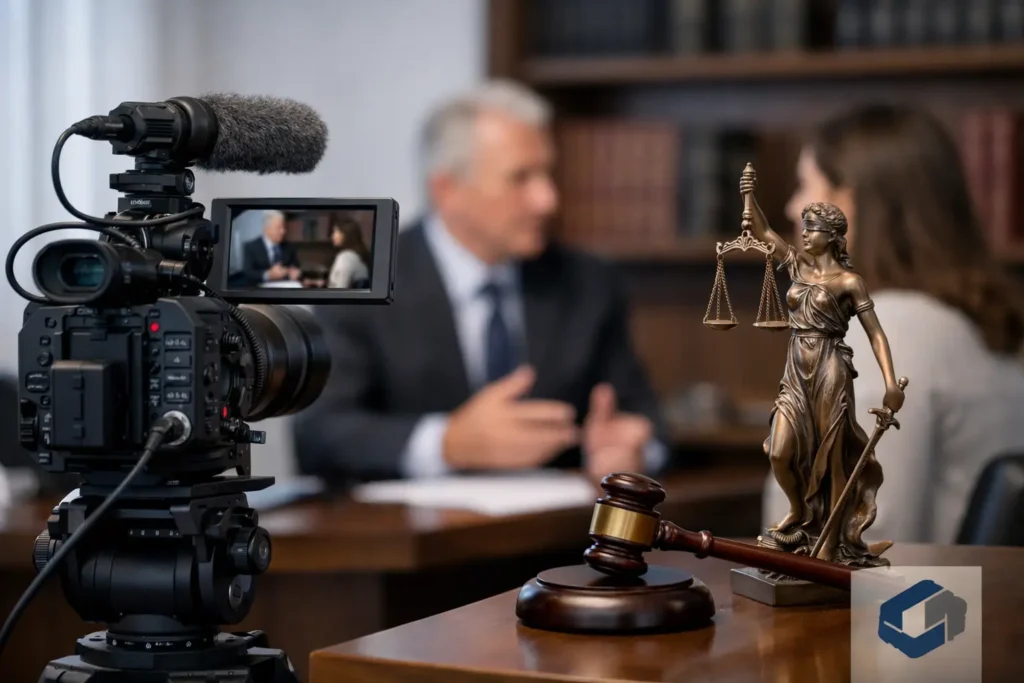
A witness pauses before answering. A deponent shrugs at a key question. An expert demonstrates a physical limitation that a transcript can only describe in plain text. Those moments often shape how testimony is understood, and they are exactly why the top benefits of legal videography matter in real litigation.
For attorneys, paralegals, and litigation support teams, video is not an extra layer of production for its own sake. It is a practical case tool. When handled by a legal video specialist who understands procedure, timing, and evidentiary standards, videography helps preserve testimony accurately, improve review efficiency, and support stronger presentation at mediation, settlement discussions, and trial.
Why the top benefits of legal videography matter in litigation
Legal matters are built on facts, but cases are often decided by how clearly those facts are presented. A written transcript remains essential, yet it cannot fully capture tone, pace, demeanor, silence, or visible injury. Video fills that gap.
That does not mean video replaces every other litigation support tool. It means video works best as part of a larger strategy. In some cases, the main value is preserving testimony from a witness who may be unavailable later. In others, the advantage is giving trial counsel sharper impeachment material or more persuasive clips for presentation. The benefit depends on the matter, the witness, and the stage of litigation.
Video preserves more than words
One of the most significant benefits of legal videography is that it records the full communication event, not just the transcript. A witness’s expression, hesitation, confidence, uncertainty, and body language can all affect how testimony is received.
That added context matters in disputed liability cases, personal injury matters, expert testimony, and any deposition where credibility is central. Reading “I don’t recall” on a page is one thing. Seeing how that answer was delivered can create a very different impression.
This is especially useful when testimony may later be presented to a judge, jury, mediator, or opposing counsel who was not in the room. Video creates a more complete record and reduces the risk that key nuances are lost between the deposition and the next phase of the case.
It strengthens witness preservation
Not every witness will be available when a case reaches hearing or trial. Schedules change, health conditions worsen, travel becomes difficult, and memory fades. Legal videography helps preserve testimony in a format that remains usable and persuasive later.
This is particularly important in matters involving treating physicians, vulnerable witnesses, out-of-state experts, or individuals whose condition may materially change over time. A professionally recorded deposition can protect the record and give counsel more flexibility if live testimony becomes impractical.
There is a trade-off here. Preservation only helps if the recording is done properly. Poor framing, weak audio, inconsistent handling of exhibits, or a videographer unfamiliar with deposition protocol can reduce the usefulness of the final product. That is why specialized legal production experience matters.
Trial preparation becomes faster and more focused
One of the top benefits of legal videography for busy legal teams is efficiency. Reviewing hours of testimony is demanding enough without having to rely on text alone for every strategic call. Video gives attorneys and support staff another way to identify strong admissions, inconsistent statements, and persuasive moments.
When combined with transcript synchronization, the value increases. Legal teams can move directly to key passages, compare testimony more quickly, and prepare designated clips with less friction. That saves time during trial prep, but it also helps earlier in the case when preparing for mediation, motion work, or expert consultation.
For paralegals and office administrators managing deadlines, this can reduce unnecessary back-and-forth. The right production workflow keeps deliverables organized and usable instead of creating another file management problem.
Video can improve courtroom and mediation presentation
A well-edited deposition clip usually lands differently than a page of transcript read aloud. Judges, juries, and mediators process visual information quickly. When testimony is presented clearly, with clean audio and precise editing, the point is easier to follow and often more memorable.
That does not mean every case needs heavy video presentation. Sometimes a simple playback of a key answer is enough. Other times, a more developed approach is appropriate, especially where testimony needs to be condensed, synchronized, or paired with exhibits for efficient use in court.
The advantage is not theatrics. It is clarity. Legal videography helps present evidence in a format that respects the audience’s time and supports the attorney’s argument without distraction.
It supports impeachment and consistency analysis
Deposition testimony often becomes critical later when a witness changes position, softens prior statements, or attempts to explain away a clear answer. Video can be particularly effective in those moments because it captures not only what was said, but how directly it was said.
That can make impeachment stronger and more precise. A transcript excerpt may be challenged on tone or context. Video narrows that argument because the original exchange is visible.
This benefit is most useful when the recording is technically solid and procedurally dependable. Clean audio, stable image quality, and accurate synchronization all matter. If a legal team needs to use testimony under pressure, there is little room for technical uncertainty.
Specialized productions can document damages more clearly
Legal videography is not limited to depositions. In many cases, the most persuasive visual evidence comes from specialty productions such as day-in-the-life videos or accident reconstruction support.
A day-in-the-life production can show the practical effect of an injury in a way that medical records and testimony alone often cannot. Daily limitations, mobility issues, pain-related routines, and caregiving needs become concrete rather than abstract. That kind of documentation can help factfinders understand damages with greater accuracy.
Accident reconstruction support can also be valuable when movement, timing, or spatial relationships are central to the case. Here again, the goal is not flash. It is to make complicated facts easier to evaluate.
These projects require judgment. Not every matter benefits from them, and not every case needs the same level of production. The right question is whether video will clarify a disputed issue or document a condition more effectively than words alone.
Hybrid and remote proceedings are more manageable
Modern litigation often involves remote experts, out-of-town witnesses, and hybrid deposition formats. One of the practical benefits of legal videography today is that it helps maintain consistency and professionalism across those settings.
Remote proceedings are convenient, but convenience can introduce technical risk. Audio dropouts, participant confusion, exhibit handling problems, and inconsistent recording quality can create avoidable complications. Experienced legal video support helps reduce those issues through controlled setup, monitoring, and format-specific workflow.
For legal teams, that means less time troubleshooting and more confidence that the final recording will be usable. In fast-moving matters, dependable execution is often as valuable as the recording itself.
Professional production protects credibility
There is a visible difference between a legal video produced by a trained specialist and one captured as a generic meeting recording. Framing, audio, room setup, witness placement, on-screen identification, and overall handling affect how professional and credible the material appears.
That appearance matters because legal video is often viewed in high-stakes settings. If the production feels careless, it can distract from the substance of the testimony. If it feels controlled and court-ready, it supports the seriousness of the presentation.
For firms managing demanding calendars, working with an experienced provider also reduces supervision burdens. Attorneys should not need to teach a videographer how depositions work. They need a partner who understands the environment, anticipates issues, and delivers accurately on deadline. That is where a company like Royal Video Productions brings practical value to legal teams across the Seattle area.
The real benefit is better control over the record
When legal videography is done well, it gives attorneys more control over how testimony and evidence are preserved, reviewed, and presented. That control shows up in different ways. Sometimes it means a witness’s demeanor is captured for later use. Sometimes it means synchronized clips are ready when trial prep tightens. Sometimes it means documenting injury or technical facts in a form people can understand quickly.
The best use of video is not automatic. It depends on the case theory, the witness, the forum, and the timeline. But when the stakes are high and the record needs to be clear, legal videography is often one of the most practical tools a litigation team can put to work.
The strongest litigation support usually comes from decisions made early, before deadlines compress and options narrow. If video may matter later, treating it as part of case strategy from the start usually pays off.