
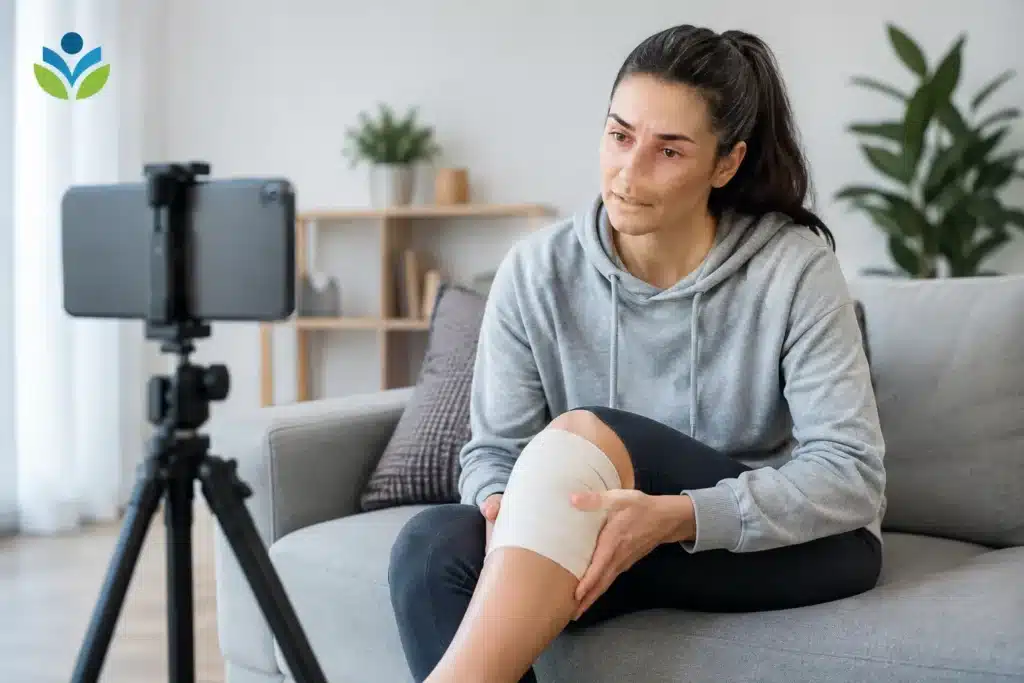
A claimant struggling to button a shirt, climb a short flight of stairs, or safely lift a child can communicate more in a few accurately documented minutes than through a lengthy description in a medical record. Knowing how to film injury limitations is not about creating drama. It is about producing a truthful, clear record of how an injury affects daily function, independence, work, and family life.
For personal injury litigation, the strongest footage is usually quiet and specific. It lets the viewer observe real limitations without being told what conclusion to reach. That requires careful planning, informed consent, professional production judgment, and close coordination with counsel.
Start With the Legal Purpose
Before a camera is placed in the home, workplace, or treatment setting, identify what the footage must establish. A day-in-the-life production may document pain-related limitations, loss of mobility, dependence on caregivers, changes to employment tasks, or the accommodations required to complete ordinary activities. The scope should be tied to the damages theory and the available evidence.
Counsel should determine which activities are relevant, whether filming could create discoverable issues, and how the finished program will be used. A mediation presentation may call for a concise sequence that establishes daily impact quickly. Trial preparation may require a more complete record, carefully organized with supporting interviews, medical context, and exhibits.
The production team should also understand what not to film. Unrelated family matters, private documents, identifiable third parties, and activities that could confuse the factual record do not strengthen the case. They create distractions and may raise privacy concerns.
Plan How to Film Injury Limitations Naturally
The best legal video productions begin with a preproduction conversation among counsel, the client, and the videographer. The goal is to identify ordinary activities that reliably demonstrate the claimed limitation. These should be tasks the injured person actually performs or attempts to perform, not a list of scenes invented for the camera.
A useful plan follows the person’s normal routine. Morning tasks can show difficulties getting out of bed, dressing, bathing, preparing food, or managing medication. Later scenes may address driving, attending therapy, navigating a workplace, completing household chores, or relying on a spouse or caregiver. The sequence should reflect a real day, even if filming occurs over more than one day for practical reasons.
Avoid directing the subject to exaggerate pain, repeat an action until it appears worse, or perform an unsafe task. If an activity presents a fall risk or could aggravate an injury, it should not be staged simply because it might make compelling video. Credibility is more valuable than a dramatic shot.
Choose Specific Activities, Not General Claims
“Cannot do household work” is a broad statement. Footage of a person pausing after loading a dishwasher, using an adaptive device to reach a cabinet, or needing assistance to carry laundry gives that statement practical meaning. Likewise, a worker’s limitation may be clearer when viewers see the height of a shelf, the distance required to walk, or the repetitive motion a job once demanded.
The activity must be representative. A single difficult moment may not establish a consistent limitation, while a routine that shows pacing, rest breaks, braces, mobility aids, or caregiver assistance may provide a more reliable picture. If symptoms vary by day, that context can be addressed through testimony or a properly planned interview rather than forcing the client to perform beyond their capacity.
Protect Authenticity and Safety on Set
Legal video must withstand scrutiny. That starts with an environment where the client can behave normally and where the crew does not interfere with the activity being documented. A professional videographer works efficiently, uses unobtrusive equipment where appropriate, and records enough context for the scene to be understood.
The camera should capture both the action and its practical consequences. For example, a wide shot may establish a stairway or work area, while a closer angle can show a hand bracing against a rail, difficulty gripping an object, or the use of a prescribed mobility aid. These images should clarify the event, not manipulate the viewer’s emotions.
Sound matters just as much. Natural audio may capture instructions from a therapist, communication between a client and caregiver, or the time and effort required to complete a task. When interviews are included, record them in a quiet location with clean, intelligible audio. Poor sound can undermine otherwise excellent footage.
Safety remains the priority. Have the subject use their normal supports and follow the restrictions provided by treating professionals. Do not ask someone to remove a brace, forgo an assistive device, lift beyond a restriction, or navigate a hazardous area to obtain a better image. If an activity cannot be filmed safely, an interview, medical illustration, or other demonstrative evidence may communicate the point more appropriately.
Document Context Without Turning the Video Into Advocacy
A persuasive legal video provides orientation. Viewers should understand who is present, where the activity occurs, and why the task matters. Brief, accurate on-screen identifiers or interviews can supply this context, subject to counsel’s strategy and evidentiary requirements.
Context should not become editorializing. Avoid loaded captions, unsupported conclusions, overly emotional music, or editing that implies an event occurred differently than it did. In many cases, natural sound, straightforward sequencing, and restrained graphics are more effective because they allow the facts to carry the presentation.
Interviews can be valuable when they explain details the camera cannot show. The injured person may describe how long a task now takes, what pain or fatigue follows, or what activities have been abandoned. A family member may explain the assistance they provide. Treating providers may address medical restrictions when their participation is appropriate and properly coordinated. These statements should be prepared with counsel and should remain consistent with the evidence.
Maintain a Reliable Production Record
The final video is only one part of the work. For litigation support, the production process should be organized and defensible. Preserve original media, maintain project files, and follow established procedures for secure handling and delivery. Counsel may need clips, full-resolution files, transcripts, synchronized video, or revised exports for mediation, deposition use, or courtroom playback.
Editing should improve clarity, not alter substance. Removing setup time, camera repositioning, or irrelevant material is often appropriate. Rearranging events without clear disclosure, selectively cutting statements to change their meaning, or adding effects that distort timing can create avoidable challenges.
A review process with counsel is essential before the program is finalized. Confirm names, dates, labels, and the order of scenes. Check that private information has been addressed and that footage supports the intended legal theory. Build sufficient time for revisions, especially when a court date or mediation deadline is approaching.
When Professional Legal Video Makes the Difference
A smartphone may capture a quick reference clip, but it rarely provides the production quality, audio control, planning discipline, and evidentiary awareness needed for a finished legal presentation. Injury limitation footage often takes place in uncontrolled environments with difficult lighting, tight spaces, emotional family circumstances, and real safety concerns. Those conditions reward experience.
A specialized legal video team can coordinate respectfully with the client while keeping the production aligned with counsel’s objectives. For attorneys throughout the Pacific Northwest, Royal Video Productions brings that litigation-focused approach to day-in-the-life and custom demonstrative video work, with attention to accuracy, deadlines, and courtroom-ready delivery.
The most effective injury limitation video does not ask viewers to imagine a client’s losses. It gives them a fair, carefully documented opportunity to see the everyday realities that testimony and records alone may not fully convey.