
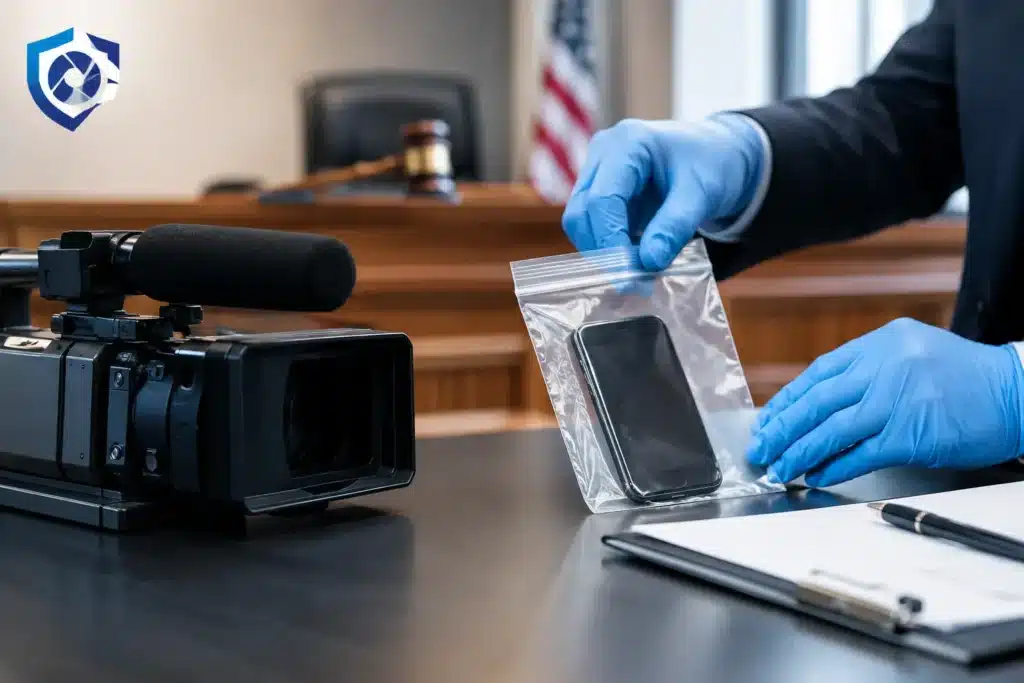
A video can be clear, compelling, and technically polished yet still invite challenge if no one can explain where it came from, who handled it, or whether it changed along the way. Legal video chain custody is the practical record that answers those questions. For attorneys preparing video depositions, incident footage, day-in-the-life presentations, or demonstrative evidence, it is part of protecting the credibility of the work from capture through courtroom playback.
Chain of custody is not a single form or a label applied at the end of production. It is a disciplined process. The right level of documentation depends on the source, the jurisdiction, the purpose of the footage, and the anticipated dispute. But the central goal remains the same: be ready to establish that the video offered is what the proponent says it is.
Why Legal Video Chain Custody Matters
Video feels self-authenticating to many viewers because it appears to show events directly. In litigation, that assumption can create risk. A recording may be questioned for completeness, editing, timing, audio quality, file conversion, storage practices, or access by third parties. The challenge may be narrow, but it can consume valuable preparation time when trial or mediation is approaching.
A documented chain helps legal teams respond with facts rather than assumptions. It can identify the recording device or platform, the person who created or received the file, the date and method of transfer, the locations where it was stored, and the versions created for review or presentation. When a video was edited, it should also clarify what was done, why it was done, and whether the original remains preserved.
This is especially relevant when footage moves quickly among attorneys, paralegals, experts, insurers, witnesses, and production personnel. Email attachments, consumer file-sharing tools, re-encoded clips, and unnamed downloads may be convenient in the moment. They can also make it harder to distinguish an original source file from a working copy months later.
Chain custody documentation does not guarantee admissibility, and it does not replace case-specific legal analysis. Authentication requirements and procedural rules vary. Still, consistent handling gives counsel a far stronger factual foundation for motions, witness preparation, settlement presentations, and courtroom use.
Build the Chain From the First Recording
The strongest process begins before anyone needs to defend it. For professionally recorded legal video, that means treating the first captured media as a source asset, not simply as a file to be copied, trimmed, and circulated.
Record the facts that identify the source
At capture, document the basic facts that later establish context: the date, approximate time, location or remote platform, operator, participants, equipment or software used, and the matter for which the recording was made. For a video deposition, this record should align with the governing procedure and the information maintained by the appropriate officer, reporter, or videographer.
For remote and hybrid proceedings, identify the platform and the recording method. Was the file created locally, in the cloud, or both? Was there a separate audio feed? Were exhibits displayed or marked through another system? These details can matter if a party later asks whether the video fairly represents what occurred.
Preserve the original before creating working versions
Original does not always mean one thing in digital video. A camera card may hold the first-recorded media. A conferencing platform may generate a cloud recording. A security system may export a clip from a proprietary system. The practical question is whether the legal team can identify and preserve the earliest available source in a manner that prevents accidental overwrite, loss, or confusion.
Keep the source file separate from working copies. Use clear naming conventions that distinguish original media, review copies, edited segments, synchronized deposition files, and final presentation outputs. A clean folder structure may seem administrative, but it reduces the chance that someone sends the wrong version to opposing counsel or loads an incomplete file for trial.
For matters where alteration is likely to be disputed, technical verification may be appropriate. A file hash, created at intake and checked later, can help demonstrate that a particular digital file has not changed. Hash values are useful evidence of consistency, but they are not a substitute for a complete handling record or knowledgeable testimony about the process.
Control transfers and access
Every transfer does not require a dramatic ceremony. It does require enough information to reconstruct what happened. Record who provided the file, who received it, when the transfer occurred, the transfer method, and the identity of the file or media. Limit access to personnel with a defined role, particularly when footage contains confidential testimony, protected health information, or sensitive witness material.
A workable chain-of-custody log should capture at least these recurring events:
- Initial recording, receipt, or collection of the source media
- Storage location and any preservation action taken
- Transfers to counsel, experts, vendors, or authorized staff
- Creation of copies, exports, edits, or format conversions
- Return, archival, or disposition of media after the matter
The record should be proportionate. A short, routine deposition may not demand the same controls as surveillance video central to a contested liability claim. What matters is that the process is deliberate, repeatable, and explainable.
Legal Video Chain Custody in Hybrid Depositions
Hybrid depositions create a broader evidence trail because the proceeding may involve an in-room witness, remote attorneys, a court reporter, exhibits exchanged electronically, and multiple audio or video feeds. A technical failure can also produce more than one partial recording. Without organization, those assets can be difficult to reconcile later.
Before the deposition, the legal team should decide which recording is the designated legal video record and how backup media will be handled. The production team should confirm where source files will be stored, how they will be delivered, and who is authorized to request copies. If a platform creates an automatic cloud recording, preserve the relevant platform details and avoid treating a downloaded, renamed version as the only source.
Afterward, distinguish between the proceeding record and convenience copies created for review. A compressed file sent to a client may be useful, but it should not quietly replace the higher-quality source or the designated final deposition video. This distinction becomes especially valuable when preparing synchronized playback for trial.
Editing Does Not End the Evidence Story
Editing can make legal video more useful and more persuasive. It can remove agreed-upon objections, create designated clips, improve navigability, add exhibit callouts, or produce a day-in-the-life presentation that helps a fact finder understand daily limitations. Editing also creates a new version that must be accurately described.
The answer is not to avoid edits. It is to preserve the source and maintain a clear record of the editorial process. For each final deliverable, counsel should be able to identify the source material used, the editor or production team, the date created, and the nature of the changes. Where appropriate, retain an edit decision list, a project archive, or a written description of selected testimony and omitted material.
Transcript synchronization deserves the same care. Synchronization should be checked against the certified or otherwise controlling transcript and the actual video. A mismatch in speaker identification, page-and-line reference, or timing can distract from a strong presentation and create unnecessary questions about reliability.
Royal Video Productions approaches these distinctions as part of legal production work, not as an afterthought. The objective is a courtroom-ready deliverable that remains traceable to the underlying material and practical for counsel to use under deadline.
Prepare for the Challenge Before It Arrives
When a video may be contested, the best witness is often the person who can explain the relevant portion of the process firsthand. That could be the videographer, records custodian, investigator, fact witness, platform administrator, or editor. Counsel should identify early who can testify to recording, preservation, transfer, and any modifications.
Do not wait until the eve of a hearing to test the evidence trail. Review the source files, metadata where available, logs, correspondence, and final outputs together. Confirm that the file intended for presentation opens on courtroom equipment, matches the approved version, and is accompanied by the information needed to authenticate it. If there is a gap in the record, address it candidly and determine whether a witness, declaration, stipulation, or additional documentation can resolve the issue.
The practical standard is simple: every significant video asset should have a clear story. A legal team that can tell that story from capture to playback is better positioned to keep the focus where it belongs – on the evidence itself.