
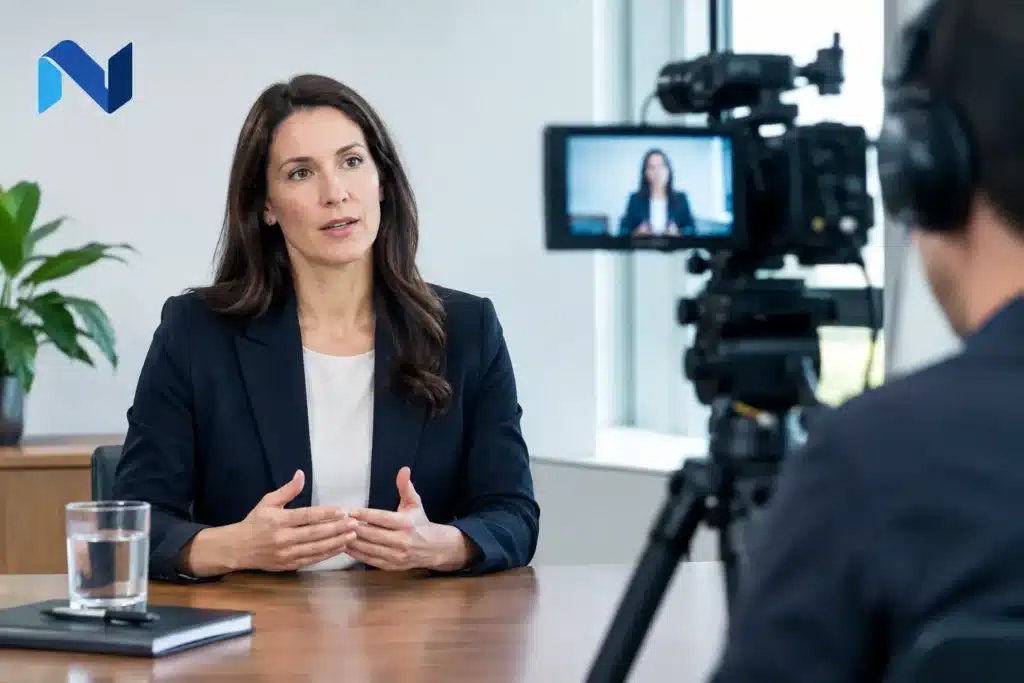
A witness may be available for one afternoon, a key expert may live across the country, and trial may be months away. Those realities make the question, what is deposition videography, more than a technical one. It is about preserving testimony in a format that shows not only what a witness said, but how they said it – with the clarity, reliability, and procedural awareness legal teams need.
What Is Deposition Videography?
Deposition videography is the professional recording of sworn deposition testimony for use during litigation, mediation, trial preparation, or presentation at trial. A legal videographer records the witness, attorneys, and other necessary participants while maintaining a clear visual and audio record of the proceeding.
The finished video is not simply a camera file. When handled correctly, it is a litigation asset produced to legal standards and coordinated with the official deposition process. It may later be used to review testimony, prepare impeachment clips, support settlement discussions, present unavailable-witness testimony, or create a synchronized video transcript for efficient case preparation.
A deposition remains a sworn proceeding whether it takes place in a conference room, by Zoom, or in a hybrid format with participants joining from multiple locations. Video adds the witness’s demeanor, pauses, tone, gestures, and visible reactions to the written record. That added context can be valuable, but it also raises the stakes for production quality and procedural consistency.
What a Legal Videographer Does During a Deposition
A qualified legal videographer does much more than press record. Before the proceeding begins, the videographer confirms the production setup, frames the witness appropriately, checks audio, and coordinates with the court reporter and legal team. The goal is a clean, stable record that keeps attention on the testimony rather than the technology.
During the deposition, the videographer monitors recording status, sound quality, camera framing, and the handling of video exhibits when needed. The work must be discreet. Attorneys should be able to focus on questioning, objections, and the witness without having to manage microphones, cameras, or recording failures.
The videographer also follows the required on-record procedures for the assignment. This commonly includes identifying the case, witness, location or remote platform, date, and participants, then documenting breaks and the conclusion of the session. Exact requirements can vary by jurisdiction, stipulation, court rules, and the purpose of the video. Experienced legal video support helps the production align with the needs of the matter from the start.
Afterward, the production team organizes, processes, and delivers the footage in the requested format. Depending on the assignment, deliverables may include the full deposition video, encrypted digital files, video clips, exhibit handling, synchronized transcripts, or edited designations for trial or mediation.
Why Video Testimony Can Matter
A transcript captures words. Video captures communication.
That difference is especially meaningful when credibility, condition, emotion, comprehension, or demeanor may affect how testimony is evaluated. A written answer may not show a long hesitation before a response, a witness’s uncertainty when shown an exhibit, or the confidence of an expert explaining a technical opinion. Video should never replace careful transcript review, but it provides an additional layer of information for the legal team.
Video can also make deposition testimony more practical to use later. Attorneys preparing a case can review key moments quickly, share selected material with authorized team members, and identify testimony that may warrant designation. At mediation, a concise, well-prepared excerpt can communicate a witness’s presentation more directly than pages of transcript alone.
For trial, video may be particularly useful when a witness cannot appear live because of distance, health, scheduling, or other legitimate constraints. Whether and how deposition video may be used is governed by applicable rules, rulings, and agreements. Counsel should make those strategic and legal decisions. The videographer’s role is to provide an accurate, usable recording that supports those options.
Deposition Video, Zoom Depositions, and Hybrid Proceedings
The setting has changed, but the need for a dependable record has not. Many depositions now involve remote witnesses, attorneys appearing by video conference, interpreters, document-sharing platforms, or a mix of in-person and remote participants.
A Zoom deposition is not automatically a professionally produced video deposition. Recording a meeting through a conferencing platform may be suitable for internal reference in some situations, but it can create limitations involving image quality, speaker layout, audio consistency, participant identification, exhibit presentation, and file management. A professional legal videographer can manage a more controlled recording process while helping the proceeding run smoothly.
Hybrid depositions require additional planning because the room and the remote environment must work together. The witness needs to be clearly visible and audible. Remote attorneys need reliable access to the proceeding. Exhibits must be introduced in a way that avoids confusion. The court reporter, interpreter, and videographer must be able to perform their respective roles without technical interference.
This is where experience matters. The best approach depends on the witness location, number of participants, anticipated exhibits, platform requirements, bandwidth, and the intended use of the video. A short pre-deposition conversation can prevent avoidable complications on the record.
How Transcript Synchronization Makes Video More Useful
Transcript synchronization pairs the certified written transcript with the deposition video. When the transcript is synchronized, users can search text, locate a page-and-line reference, and move directly to the corresponding video testimony. This makes review faster for attorneys, paralegals, and trial teams working under tight deadlines.
Synchronization is especially helpful in lengthy or technical matters. Instead of manually searching through hours of footage, a team can find an expert’s opinion, a disputed answer, or a foundation exchange through the transcript and immediately evaluate the witness’s delivery on video.
The process also supports the creation of deposition designations and edited clips. Those clips must be prepared carefully, with attention to counsel’s instructions, objections, rulings, and the context necessary for a fair presentation. Legal video editing is not entertainment editing. It is precise production work intended to preserve testimony accurately while making approved material ready for a courtroom, hearing, mediation, or presentation setting.
What to Look for in a Deposition Videography Provider
Legal teams benefit from a provider that understands both production and litigation workflow. General event-video experience is not the same as legal video experience. A deposition has procedural demands, confidentiality concerns, court-driven deadlines, and little room for preventable error.
Look for a provider with a consistent record of professional audio and video quality, reliable backup practices, responsive scheduling, and familiarity with remote and hybrid proceedings. Ask how the team handles last-minute changes, multiple locations, exhibit-related needs, file delivery, transcript synchronization, and trial-ready editing. The answers should be direct and specific.
Certification and category-specific experience can also provide confidence. A Certified Legal Video Specialist understands the specialized standards and practices that distinguish legal videography from ordinary video production. For complex litigation, that knowledge helps reduce the amount of oversight required from the legal team.
For Seattle-area matters and proceedings throughout the Pacific Northwest, Royal Video Productions brings decades of legal video experience to deposition coverage, remote coordination, synchronized transcripts, and courtroom-ready editing. The focus is practical: make the record dependable and make the process easier for the people preparing the case.
Preparing for a Video Deposition
The most effective video depositions begin before anyone goes on the record. Confirm whether the deposition will be in person, remote, or hybrid, and identify the witness’s location, expected participants, interpreter needs, exhibit plan, and preferred delivery requirements. If a remote witness is involved, a basic technology check can identify camera, lighting, audio, and connection issues before testimony begins.
Witness preparation remains counsel’s responsibility, but the physical environment affects the video record. A quiet room, a stable chair, a simple background, and adequate front lighting help produce a professional result. Avoid placing the witness directly in front of a bright window. For remote proceedings, encourage participants to use a wired connection when possible and silence notifications that could interrupt the record.
It is also wise to communicate the intended use of the video early. A deposition being recorded primarily for discovery may have different post-production needs than testimony expected to be designated for trial. Early planning allows the legal video team to recommend the appropriate recording setup and deliverables without creating unnecessary work later.
A well-produced deposition video cannot decide a case, but it can preserve a critical moment exactly as it occurred. When testimony may matter months or years from now, that clarity is worth planning for.