
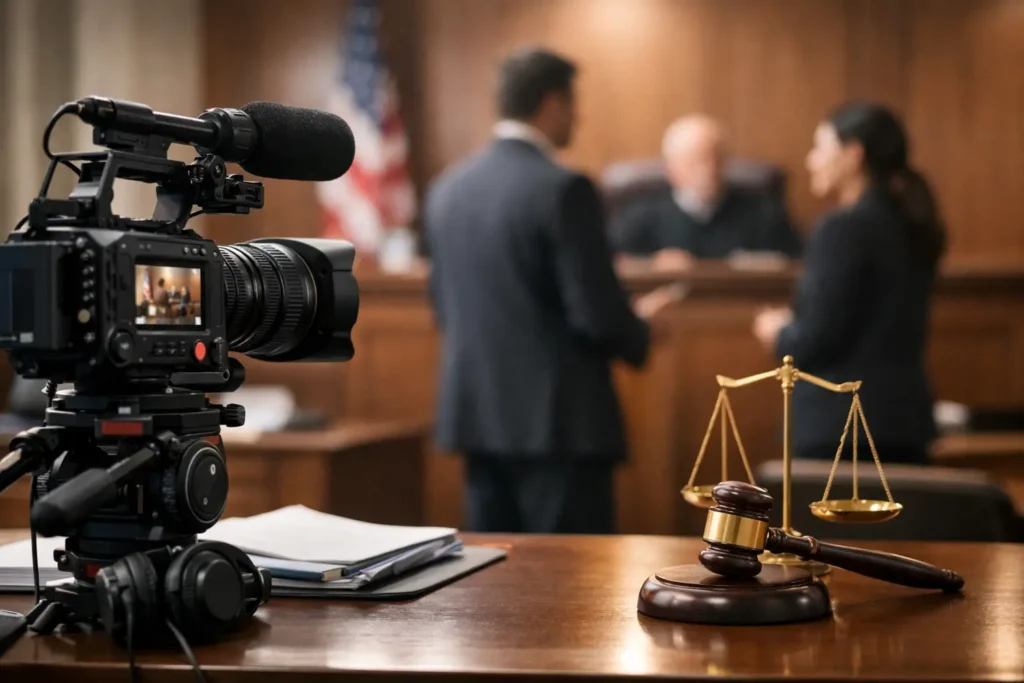
When a key witness is unavailable for trial, a deposition clip has to play cleanly, sound clear, and align with the transcript the first time. That is where litigation video production services stop being a convenience and start becoming a case-critical resource. For attorneys and litigation support teams, the value is not just in recording footage. It is in producing video that is accurate, defensible, organized, and ready for real use under deadline.
Legal video work is different from standard corporate or event production. The stakes are higher, the procedural expectations are stricter, and small technical mistakes can create outsized problems. A poorly framed witness, weak audio, inconsistent labeling, or a delayed export can disrupt trial prep and force legal teams to spend time fixing vendor errors instead of building the case.
What litigation video production services actually cover
The term can sound broad, but in practice it refers to a focused set of services designed for litigation workflows. That usually includes video depositions, Zoom and hybrid deposition capture, transcript synchronization, legal video editing, day-in-the-life productions, settlement videos, and trial playback support. In some matters, it also extends to accident reconstruction visuals or custom demonstrative media.
What ties these services together is not style. It is legal usability. The footage and edits need to support attorneys in mediation, motion practice, trial presentation, and case evaluation. A legal video provider is not there to make content look flashy. The goal is to make it clear, reliable, and fit for evidentiary or persuasive use.
Why specialized litigation video production services matter
General video crews may know cameras, lighting, and editing software. That does not automatically prepare them for the demands of legal proceedings. Litigation work requires an understanding of deposition protocol, exhibit handling, transcript-based editing, courtroom playback requirements, chain of custody concerns, and the reality of last-minute schedule changes.
That specialization matters most when the timeline tightens. Legal teams often need same-day coordination, fast file delivery, revised edits, or synchronized clips prepared for hearing or trial. A provider without legal-specific experience may still produce decent-looking video, but struggle with the workflow details that actually matter to counsel.
There is also a credibility issue. In legal settings, presentation quality can affect how testimony is received. If the witness is difficult to hear, if the edit appears sloppy, or if the playback feels improvised, it can undercut the professionalism of the presentation. Good legal video work supports the argument without drawing attention to itself.
Deposition video is more than a recording
A professionally handled video deposition is built around consistency and admissibility. Camera placement, audio capture, witness framing, time and date records, and the handling of the record all need attention. In a remote or hybrid deposition, the complexity increases because the provider has to manage platform reliability, recording integrity, participant coordination, and delivery of usable files afterward.
This is where experienced operators earn their value. They know how to anticipate issues before they interrupt the proceeding. They also understand that attorneys do not want to manage production details during testimony. The right provider keeps the process controlled so counsel can stay focused on the witness.
Transcript synchronization saves time later
Synchronized video is one of the most practical outputs in litigation support. When video is aligned to the certified transcript, attorneys can search testimony, isolate precise excerpts, and build playback clips efficiently. That matters in mediation prep, impeachment planning, and trial presentation.
Without synchronization, legal teams often waste hours locating segments manually. With it, the video becomes substantially more useful. The trade-off is that synchronization must be done carefully. Timing errors, transcript mismatches, or inconsistent clip labeling can create confusion at the exact moment clarity is needed.
Where legal teams see the strongest return
The strongest value from litigation video production services usually comes from matters where testimony, condition, or sequence needs to be seen rather than merely described. Personal injury cases are an obvious example. A day-in-the-life production can show limitations and daily impact in a way that medical records alone cannot. But those projects require judgment. If they feel exaggerated or overly produced, they can lose persuasive force.
The same is true for accident reconstruction support and demonstrative video. These tools can help a fact finder understand timing, movement, visibility, and physical relationships. Yet they need to be grounded in evidence and built with discipline. A polished visual is useful only if it remains accurate to the record and appropriate to the forum.
For many firms, the most immediate return is operational. Reliable video support reduces friction across the case lifecycle. Depositions get captured correctly. Files arrive on time. Edits reflect the transcript. Trial teams are not scrambling to convert formats or correct preventable mistakes. That kind of consistency is difficult to measure on a spreadsheet, but easy to recognize when a deadline is approaching.
What to look for in a provider
Attorneys hiring legal video support are not just buying equipment time. They are choosing a production partner who will represent part of the case presentation. Experience in the legal category should be the baseline, not a bonus. Ask whether the provider regularly handles deposition video, transcript synchronization, courtroom playback, and hybrid proceedings. A company that only occasionally works on legal matters may not have the procedural discipline these projects demand.
Responsiveness matters just as much as technical skill. Litigation schedules move quickly, and revisions are common. A good provider communicates clearly, confirms details, and delivers when promised. Fast turnaround is valuable, but only when accuracy holds. Speed without quality control can create more work for the client.
It also helps to evaluate how well the provider understands attorney workflow. Legal teams need straightforward scheduling, dependable file organization, and deliverables that are easy to use in real settings. They do not need hand-holding on the production side, and they should not have to explain basic litigation realities to their video vendor.
Local support can be a practical advantage
For firms in the Seattle area, working with a local legal video company can simplify logistics. On-site deposition coverage, coordinated hybrid setups, witness scheduling, and rapid delivery often become easier when the provider knows the local market and works in it every day. That does not mean every project must stay local, especially with remote proceedings now common. But proximity can still matter when there is little room for delay.
A specialized provider such as Royal Video Productions brings an additional layer of value because the work is centered on legal production rather than general media services. That kind of focus tends to show up in the details attorneys care about most – preparation, consistency, and courtroom-ready execution.
Common mistakes legal teams can avoid
One of the most common errors is bringing in a general videographer too late in the process. By the time the team realizes transcript sync, clipping, or playback formatting is needed, the original capture may not have been set up properly. Fixing that later can be costly or impossible.
Another mistake is treating video as a separate add-on rather than part of case strategy. The most effective use of legal video usually starts early, when counsel decides how testimony may be used, what visuals may help explain damages or liability, and what deliverables will be needed for mediation or trial.
There is also a tendency to overproduce persuasive video. In legal settings, restraint often works better. Clean editing, accurate framing, and strong sound usually carry more weight than dramatic music, stylized transitions, or overly emotional packaging. Credibility matters more than flair.
The standard should be simple
Litigation video should make legal work easier, not more complicated. It should arrive organized, play properly, reflect the record, and support the attorney’s purpose without distraction. That sounds basic, but in high-stakes matters, basic done well is exactly what legal teams need.
If you are evaluating litigation video production services, the right question is not who can shoot video. It is who can deliver dependable legal video under real case conditions, with the judgment and responsiveness that serious litigation requires. When that standard is met, video becomes more than documentation. It becomes usable evidence, persuasive support, and one less thing for your team to worry about before a deadline.