
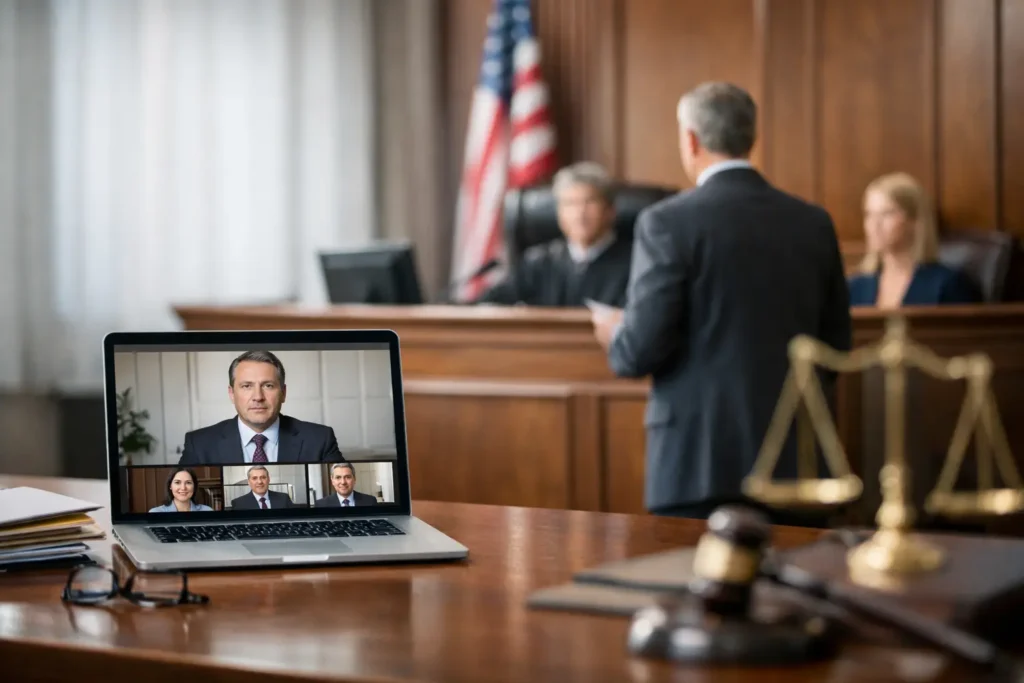
A witness appears from another state, counsel are in separate offices, and the deposition is captured through Zoom. Months later, the case is headed toward trial and a practical question takes over: are Zoom depositions admissible? Usually, the platform alone is not the deciding factor. Admissibility turns on whether the deposition was properly noticed and conducted, whether the witness was sworn, whether the record is reliable, and whether the proposed use meets the rules of the court handling the case.
For attorneys, the better question is not whether Zoom is inherently acceptable. It is whether the remote deposition was built to withstand objections when the testimony matters most.
Are Zoom Depositions Admissible? The Short Answer
Yes, Zoom depositions can be admissible, but they are not automatically admissible simply because they were recorded. A deposition taken remotely may be used under the same general principles that govern an in-person deposition. Those principles include the applicable rules of civil procedure, the rules of evidence, the terms of any stipulation or court order, and the specific purpose for which counsel offers the testimony.
In federal litigation, Federal Rule of Civil Procedure 30(b)(4) permits a deposition by remote means when the parties stipulate or the court orders it. Federal Rule of Civil Procedure 32 addresses when depositions may be used in court proceedings. Washington cases may involve the Washington Superior Court Civil Rules, local court requirements, and case-specific orders. The controlling rule set depends on the venue and posture of the matter.
That distinction matters. Permission to take a deposition remotely does not eliminate objections to particular testimony, exhibit handling, foundation, hearsay, or the manner in which the video is presented at trial. It means the remote format is authorized. Counsel still need a dependable evidentiary record.
What Makes a Remote Deposition Defensible
A Zoom deposition should be treated as a formal legal proceeding, not an ordinary video conference. The technical setup and the deposition protocol should preserve the same essentials expected in a conference room.
First, the witness must be placed under oath by a person authorized to administer it under the applicable rules. Remote oath procedures vary by jurisdiction, and parties should address any location-based issues before the deposition begins. A clear opening record should identify everyone present, state whether anyone is appearing remotely, and confirm that the deposition is being recorded.
Second, the deposition needs an accurate stenographic record when one is required or expected. The court reporter’s transcript remains central to most deposition practice. Video can provide valuable context – demeanor, pauses, gestures, and the witness’s exact presentation – but it does not replace the transcript for every procedural purpose.
Third, the video must be an authentic and complete representation of what occurred. That means preserving the original recording, documenting the capture process, and maintaining a clear chain of custody. If counsel later offers a video excerpt, the opposing side should be able to identify its source and verify that it accurately reflects the recorded proceeding.
Finally, parties need a fair process for exhibits, objections, and witness communications. A remote setting does not relax the rules against coaching or off-record communications during a pending question. It can, however, make problems harder to detect unless the protocol is clear from the outset.
The Zoom Recording Is Not Always the Trial Video
One recurring issue is the difference between a platform recording and a professionally produced legal video deposition. A Zoom recording may capture separate participant windows, variable internet quality, screen-sharing artifacts, notifications, or a layout that changes during testimony. It may be useful as a backup record, but it is not necessarily the clearest or most courtroom-ready presentation.
A dedicated legal videographer can create a controlled record of the witness, counsel, objections, and exhibits while coordinating with the court reporter and remote participants. The goal is not cosmetic polish. It is clarity, continuity, and a reliable record that can be reviewed, designated, edited under counsel’s direction, and played without distracting technical issues.
When a deposition may be used at mediation, in a dispositive-motion presentation, or at trial, production decisions made on the deposition date can determine how much work is required later. Clean audio is especially important. Jurors can tolerate an imperfect camera angle more easily than testimony they cannot hear.
Authentication and Foundation Still Apply
The party offering remote deposition video must be prepared to establish what the recording is and why it is reliable. In many situations, authentication may be straightforward: the court reporter, videographer, attorney, or another knowledgeable witness can identify the recording and explain that it fairly and accurately depicts the deposition.
The foundation becomes more complicated when the file has been edited, exported repeatedly, or pulled from an account without clear documentation. A trial-ready workflow preserves the original source files, identifies the operative version, and records the steps used to create any clips or synchronized deliverables.
Editing is often appropriate and necessary. Attorneys may designate testimony, remove sustained objections or inadmissible material, and prepare concise clips for presentation. But edits should follow counsel’s designations, court rulings, and any meet-and-confer process required by the jurisdiction. A persuasive video is not one that changes the testimony. It is one that presents permitted testimony accurately and clearly.
Common Objections to Zoom Deposition Use
Most challenges are not really about Zoom. They arise from issues that could also affect an in-person deposition, although remote proceedings create additional opportunities for error.
A party may object that the witness was not properly sworn, that unauthorized individuals were present, or that the witness received improper assistance off camera. There may be disputes about whether an exhibit displayed on screen was the same document marked in the record. Counsel may also question whether a frozen image, dropped audio segment, or incomplete recording affects the reliability of the offered clip.
Other objections concern the substantive use of the testimony. A witness’s unavailability, the reason for offering the deposition, prior opportunity for cross-examination, and the nature of the testimony can all matter under procedural and evidentiary rules. A properly recorded Zoom deposition does not make otherwise inadmissible testimony admissible.
The most effective response is preparation, not argument after the fact. Address attendance, communications, exhibit exchange, recording, backups, breaks, and technical failures in the notice, stipulation, or pre-deposition protocol. If a problem occurs, place it on the record promptly and determine whether the parties can resolve it before continuing.
A Practical Protocol for Remote Video Depositions
For higher-stakes testimony, counsel should plan the remote deposition as carefully as a trial presentation. Confirm the remote authority or party agreement in advance. Identify who will administer the oath, report the testimony, operate the video system, and manage exhibits. Make sure the witness has adequate internet, a quiet private location, usable lighting, and a camera position that allows meaningful observation.
At the start of the record, establish the witness’s location, everyone in the room or connected remotely, and the methods being used to record the proceeding. Ask the witness to disclose whether anyone else can hear the testimony and whether any prohibited communication tools are available. If exhibits will be shared electronically, use an organized marking process so the video, transcript, and exhibit set all refer to the same materials.
Technical redundancy is worthwhile. A professional legal video team can monitor audio and video, preserve a backup capture path, and respond quickly when a participant’s connection changes. That operational support lets examining counsel focus on testimony rather than troubleshooting a microphone, a screen share, or an unstable recording.
When Professional Video Support Matters Most
Not every remote deposition requires the same production level. A short discovery deposition with limited anticipated use may call for a straightforward remote setup. A key expert, a treating physician, an unavailable witness, or a damages witness may justify more rigorous planning because the testimony could later be shown to a mediator, judge, or jury.
The stakes rise when counsel expects to use synchronized video and transcript clips, needs precise exhibit callouts, or faces a compressed trial-preparation schedule. In those situations, legal-video experience helps protect both the record and the workflow. Royal Video Productions supports Seattle-area legal teams with remote and hybrid deposition production designed around those realities.
The useful standard is simple: plan the Zoom deposition as though a judge and jury may eventually see it. When the oath, record, exhibits, video capture, and post-production chain are handled with care, remote testimony can be not only usable, but credible when the case demands it.