
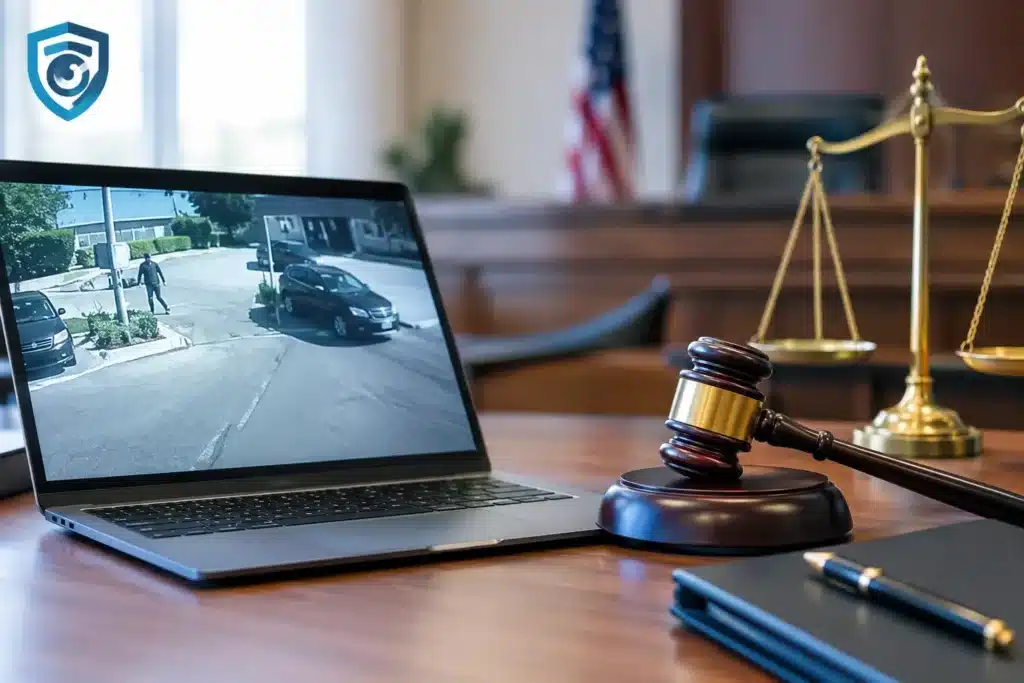
A juror who watches a witness pause before answering, sees the physical limits of an injured person, or follows a clear reconstruction of an event has more than a verbal description to consider. That is what makes video evidence persuasive: it can communicate facts, context, and credibility in a form people can understand and retain. But video is not persuasive simply because it is on a screen. Its value depends on accuracy, clarity, admissibility, and disciplined presentation.
For litigators, the goal is not to make evidence look dramatic. The goal is to make the record easier to evaluate without changing what the record means. A professionally produced legal video can support that objective, while a poorly captured or carelessly edited video can create distractions, objections, or doubt.
What Makes Video Evidence Persuasive to a Fact Finder
Video gives fact finders access to details that can be difficult to convey through a transcript or a still image alone. Tone of voice, hesitation, pace, body language, physical surroundings, and the relationship between people or objects may all matter. In a deposition, for example, a written transcript records the words. The video may also reveal whether a witness was confident, evasive, fatigued, or visibly reacting to an exhibit.
That added context is powerful only when it is reliable. Jurors are alert to signs that a video has been selectively framed, poorly recorded, or manipulated to create an impression. Persuasive legal video earns trust by presenting material cleanly and faithfully, not by pushing the audience toward an emotional response.
A useful question for every production is simple: does this footage help the viewer understand a disputed fact more accurately? If the answer is yes, the video has a legitimate role in the case. If the footage merely repeats testimony without adding useful context, it may not be worth the court time or trial-preparation effort.
Clarity Starts at Capture
The best editing cannot fully repair weak source footage. Audio must be intelligible, faces and exhibits must be visible, and the camera position must allow the viewer to follow the testimony or event without strain. These basics sound obvious, but they are often where persuasive force is won or lost.
In a video deposition, poor audio can make a witness appear less credible for reasons unrelated to the testimony. A camera that is too wide can obscure facial expression. A camera that is too tight can exclude a demonstrative exhibit, a gesture, or the interaction that gives an answer meaning. Proper lighting matters for the same reason: the viewer should be focused on the witness and the evidence, not trying to decipher what is happening on screen.
Hybrid and remote proceedings require added attention. A witness joining by Zoom may have an unstable connection, poor microphone placement, or inadequate lighting. The legal team should not assume that a usable meeting recording will produce a courtroom-ready result. Planning for reliable capture, proper participant identification, clear exhibits, and backup procedures protects the record before problems arise.
The Record Must Be Easy to Follow
Clarity also includes organization. A video used in mediation, deposition designations, or trial should begin and end in a way that makes its source and sequence clear. Dates, witness names, exhibit references, and segment boundaries need to align with the underlying record.
Transcript synchronization is especially valuable when testimony is lengthy or technically detailed. It allows counsel and the court to locate passages quickly, confirm spoken language against the transcript, and prepare designations with greater confidence. It also helps the viewer stay oriented when an answer includes names, dates, measurements, or specialized terminology.
Authenticity Builds Credibility
A video is persuasive when the court and opposing counsel can understand what it is, where it came from, and whether it fairly represents the subject. Authentication requirements vary by the nature of the evidence and the forum, but the practical principle is consistent: the production process should support, rather than complicate, a foundation for admission.
That means maintaining source files, documenting relevant handling, and avoiding unnecessary changes to the underlying content. If a video is edited for presentation, the edited version should accurately preserve the meaning of the material. Cuts should not remove qualifying statements or create a misleading sequence. Captions, labels, callouts, and enhancements should be used carefully and only when they clarify rather than editorialize.
This is particularly significant with surveillance footage, mobile-phone video, body-camera footage, and social-media clips. These sources may have incomplete metadata, unusual aspect ratios, variable frame rates, or breaks in the recording. A legal video professional can prepare the footage for review and presentation while preserving the original material and making any production choices transparent.
Context Prevents a Powerful Clip From Becoming a Weak Exhibit
The most memorable excerpt is not always the most persuasive one. A short clip may have impact, but if it removes the question that prompted an answer, excludes a key qualification, or fails to explain what occurred before or after the recorded moment, it can invite a fairness objection.
Context is often the difference between a video that informs and a video that appears calculated. In deposition editing, this may mean including enough of the examination to make the answer understandable. In a day-in-the-life production, it means showing ordinary routines and genuine limitations rather than staging a narrative that overstates hardship. In an accident reconstruction, it means clearly distinguishing established facts, assumptions, and illustrative animation.
Persuasiveness has limits. A reconstruction can help explain sightlines, speed, timing, or vehicle movement, but it must rest on competent data and be presented in a way that does not imply certainty where uncertainty remains. Similarly, a day-in-the-life video may communicate the daily consequences of an injury, yet its credibility depends on accurate representation and appropriate scope.
Professional Restraint Is More Effective Than Drama
Legal video differs from commercial video for a reason. The most effective work is often nearly invisible. Clean edits, accurate titles, balanced audio, readable exhibits, and stable playback give the evidence room to speak for itself.
Overproduced music, aggressive transitions, emotional visual effects, or loaded language can undermine the credibility of an otherwise valid presentation. Even when such techniques are not prohibited, they may cause a judge or jury to question whether counsel is trying to influence them through style rather than substance.
Professional restraint does not mean bland presentation. It means every production decision has a legal and practical purpose. Enlarging a document may make a relevant detail visible. Adding a neutral label may orient the viewer. Cleaning distracting noise may improve intelligibility when done without altering content. Each choice should make the evidence more accessible, not more theatrical.
Courtroom Readiness Is Part of Persuasion
A compelling video that fails during playback is not compelling for long. Trial teams need files that are prepared for the court’s available equipment, tested in advance, and organized for fast retrieval. That includes dependable playback formats, clear file naming, designated excerpts, backup media, and coordination with courtroom technology where appropriate.
Timing matters as well. A designated deposition clip should begin at the intended point, with synchronized transcript references available if needed. Demonstrative video should be reviewed early enough to address objections, revisions, and technical issues. When deadlines are tight, experienced legal video support helps counsel avoid spending the night before a hearing troubleshooting codecs, audio levels, or mismatched versions.
For Seattle-area legal teams handling complex matters, responsiveness can be as valuable as production skill. Litigation schedules change, witnesses become available with little notice, and last-minute rulings can alter what needs to be presented. Royal Video Productions approaches these assignments with the procedural awareness and production discipline required for time-sensitive legal work.
Build the Video Strategy Around the Case Theory
Not every case needs a major video presentation. A short, well-chosen deposition designation may be more effective than an extended montage. A clear exhibit annotation may carry more weight than a complex animation. The right approach depends on the issues in dispute, the audience, the available foundation, and the time allotted by the court.
Counsel should decide early what the viewer needs to understand that the written record alone cannot convey. From there, production choices become easier: capture the testimony properly, preserve the source material, create only the edits or demonstratives that serve a defined evidentiary purpose, and test every deliverable before it matters.
When video is accurate, intelligible, and carefully prepared, it does not ask the fact finder to be impressed. It gives them a fairer chance to see the case clearly.