
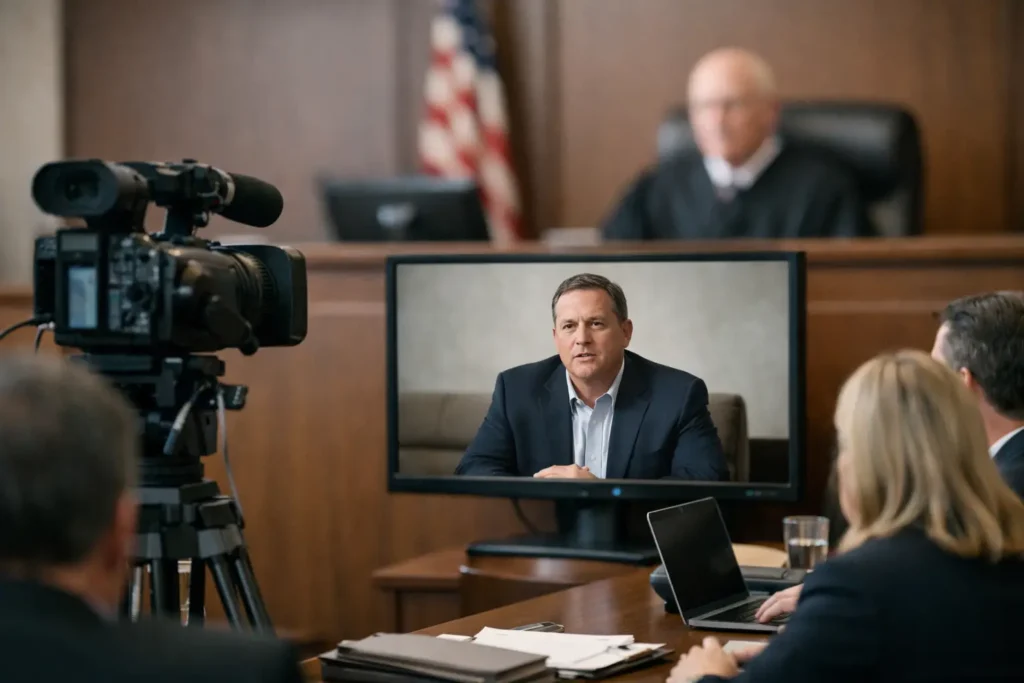
Trial teams usually ask this question when the stakes are already high – a witness may be unavailable, impeachment value matters, or a clean presentation could help the fact finder follow critical testimony. So, are video depositions admissible in court? Often yes, but only under the right procedural, evidentiary, and technical conditions.
That answer is less about the camera itself and more about foundation, notice, rule compliance, and execution. A professionally recorded deposition can become a powerful courtroom asset. A poorly handled one can create objections, delays, or a complete loss of useful testimony.
Are Video Depositions Admissible in Court Under the Rules?
In many cases, yes. Courts regularly allow video depositions when the deposition was properly noticed, taken in compliance with applicable rules, and offered for a permitted purpose. But attorneys know the real answer is always more specific than that. Admissibility depends on the jurisdiction, the type of proceeding, the reason the testimony is being offered, and whether the recording was created and preserved correctly.
At the federal level, video depositions are generally addressed through the Federal Rules of Civil Procedure and the Federal Rules of Evidence. State courts, including Washington courts, have their own rules and local practices. Those rules often cover how a deposition may be recorded, how objections are preserved, when deposition testimony can be used at hearing or trial, and whether edited designations must be exchanged before playback.
A video deposition is not automatically admitted just because it exists. The court will still look at relevance, hearsay exceptions or exclusions, witness availability, prejudice, and whether the format presented is fair and accurate. In other words, the video is a delivery method. The legal basis for using the testimony still has to be there.
When Courts Commonly Allow Video Deposition Testimony
The most common scenario is witness unavailability. If a witness is outside subpoena range, medically unable to attend, deceased, or otherwise unavailable under the applicable rules, deposition testimony may be used at trial if the procedural requirements are met. Video can be especially useful here because the jury or judge sees tone, timing, hesitation, and demeanor rather than hearing a cold read from the transcript.
Video depositions are also often used for impeachment. If trial testimony departs from prior sworn testimony, a video clip can be more effective than reading a transcript excerpt. The impact is not just rhetorical. It can reduce confusion and make the record clearer for the court.
Expert testimony is another frequent use case. In some matters, especially when scheduling is difficult or costs are an issue, counsel may preserve expert testimony by video for later presentation. Courts may permit this, but they will still expect compliance with disclosure requirements, designation procedures, and evidentiary limits.
There are also circumstances where video testimony is presented by agreement. If counsel stipulate to use of a video deposition, many disputes can be narrowed in advance. Even then, the court may still require proper editing, removal of objectionable material, and a clean final playback file.
What Can Make a Video Deposition Inadmissible?
The biggest problems usually start before anyone enters the courtroom. If notice was defective, if the method of recording was not properly stated, or if the officer’s certification and chain of custody are weak, admissibility can become harder to defend. Opposing counsel may challenge not only the use of the testimony but also the integrity of the recording itself.
Technical issues matter more than many people expect. Poor audio, dropped segments, camera framing that obscures the witness, and interruptions in the record can all create avoidable disputes. If the video does not clearly and reliably reflect the testimony, its usefulness drops quickly.
Editing is another area where risk rises. Courts often permit edited playback of designated portions, but the edits must be accurate, balanced, and consistent with rulings on objections. Sloppy editing can distort context or leave disputed material in the final file. That creates unnecessary motion practice and can undermine credibility at exactly the wrong time.
Authentication problems can also block use. The offering party may need to show that the recording is what it claims to be, that it has not been altered improperly, and that it fairly represents the sworn testimony taken on the record. This is where experienced legal video handling becomes practical, not cosmetic.
Procedure Often Matters More Than Equipment
Attorneys sometimes assume admissibility turns on whether the video looks polished. Presentation quality helps, but courts care first about compliance. Was the deposition properly noticed as a videotaped deposition? Were all parties given an opportunity to attend and object? Was the witness sworn on the record? Was the operator qualified? Was the recording handled in a way that supports authenticity and accuracy?
Those questions usually matter more than whether the background was perfect or the lighting was flattering. A courtroom-ready video deposition is built on process. That includes consistent labeling, accurate date and case identification, reliable audio capture, and preservation methods that allow counsel to defend the integrity of the file if challenged.
This is one reason legal teams often prefer a specialist over a general videographer. Legal deposition work has its own standards, timing pressures, and post-production requirements. The person behind the camera needs to understand that the final audience may be a judge ruling on objections, not just a client watching a recap.
Are Video Depositions Admissible in Court if Taken by Zoom?
They can be, but remote format adds another layer of scrutiny. Since remote and hybrid depositions became routine, courts have grown more comfortable with them, but comfort is not the same as automatic acceptance. Counsel should still think carefully about identity verification, exhibit handling, off-camera coaching concerns, connectivity interruptions, and whether the record clearly shows who was present.
A Zoom deposition that is professionally managed can be entirely suitable for later use. A casual recording made without clear protocols is more vulnerable. If the witness freezes during a key answer, audio drops out, or side conversations are not captured cleanly, those defects can matter later.
Remote depositions also raise practical questions about what file becomes the official video record, how backups are maintained, and whether the final deliverable aligns with transcript synchronization and designation workflows. For trial preparation, those details affect speed and reliability just as much as they affect admissibility.
How Proper Legal Video Support Reduces Courtroom Risk
The best legal video work does not call attention to itself. It creates a clear, neutral, dependable record and then supports the litigation team with deliverables that are easy to use under deadline. That means stable image capture, intelligible audio, accurate indexing, and post-production that respects the transcript and the court’s evidentiary rulings.
It also means understanding what attorneys need after the deposition ends. Designation edits may be required. Objection cuts may need to be made quickly. Trial teams may want synchronized playback for mediation, witness prep, or courtroom presentation. If the underlying production was done correctly, those later steps are faster and safer.
For firms handling complex or time-sensitive matters, that reliability matters. In the Seattle legal market, experienced providers such as Royal Video Productions are often brought in not just to record testimony, but to make sure the final product is usable when the pressure is highest.
Practical Questions to Ask Before You Rely on Video at Trial
Before assuming a video deposition will be shown in court, it helps to look at the issue from the judge’s perspective. Is there a clear rule-based reason the deposition testimony may be used? Has the testimony been designated and edited in a way that removes objectionable content? Can the offering party establish authenticity without drama? And will the playback file function cleanly in the courtroom or hearing room where it will be used?
Those are not minor details. They shape whether the video becomes persuasive evidence or an avoidable source of friction. The strongest approach is to plan for admissibility from the start, not after the deposition is over.
For attorneys and litigation support teams, the core point is straightforward. Video depositions are often admissible in court, but admissibility depends on much more than hitting record. When the rules, the record, and the production process line up, video testimony can do exactly what it should – preserve evidence clearly and present it credibly when the case demands it.
If there is any chance a deposition may need to be played in court, treat that possibility as part of the production plan on day one. It is far easier to capture a clean, defensible record at the outset than to fix preventable problems when trial is already on the calendar.