
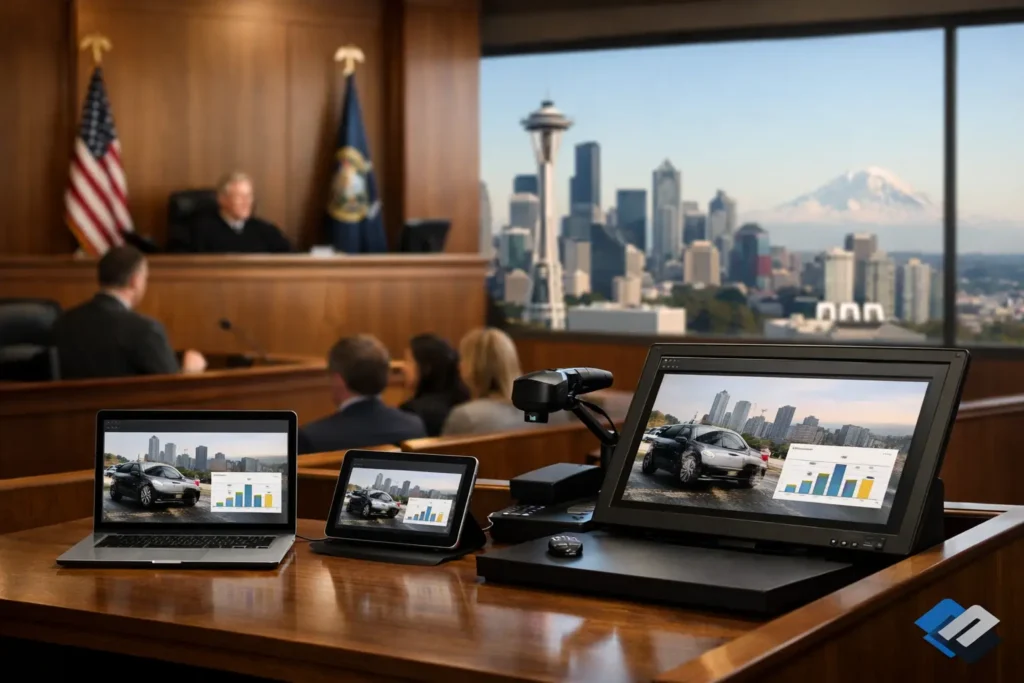
A trial presentation can lose force long before opening statements if a key clip will not play, an exhibit cannot be located, or counsel must spend valuable minutes troubleshooting technology. Trial presentation Seattle support should remove those distractions. The goal is straightforward: present testimony, documents, demonstratives, and video in a clear sequence that helps the fact finder stay focused on the evidence.
For Seattle-area litigators, effective presentation work is not simply about putting material on a screen. It is a disciplined process of organizing the record, preparing dependable playback, and anticipating the pace and pressure of the courtroom. When the evidence is technically sound and easy to follow, counsel has more room to advocate.
What a Strong Trial Presentation Actually Does
A courtroom-ready presentation gives legal teams control over how information is introduced and reviewed. That control matters in complex personal injury, liability, commercial, and other fact-intensive matters, where a witness statement, a medical record, or a single frame of video may carry significant weight.
The strongest presentations make the evidence easier to absorb without changing its meaning. A synchronized deposition allows counsel to move from a question-and-answer exchange to the corresponding transcript. A carefully prepared video clip can focus attention on the relevant testimony without asking jurors to wait through unrelated material. Exhibits can be called up in the correct order, enlarged when necessary, and displayed with consistent labeling.
That clarity serves more than appearance. It reduces friction at the exact moment counsel needs to make a point. It also helps the trial team maintain a professional, prepared presence before the court.
Trial Presentation Seattle Preparation Starts Before Trial
Courtroom technology is most reliable when the planning starts well before the first day of trial. Waiting until the week before trial to gather deposition designations, confirm exhibit versions, and test video formats creates avoidable risk. Litigation teams benefit when production support is included in the trial-preparation calendar alongside witness scheduling and motion deadlines.
The initial planning conversation should establish what will be presented, where it will be presented, and who will control it. A presentation for mediation may require a different level of setup than a multi-week jury trial. A remote witness appearance has different technical needs from an in-person deposition clip. Courtroom rules, available equipment, and judicial preferences can also affect the final plan.
A practical production workflow typically addresses the following four areas:
- deposition video, transcript synchronization, and designated excerpts;
- exhibit organization, naming, and final-file verification;
- demonstrative video, including day-in-the-life or accident reconstruction support; and
- playback planning, backups, and on-site or remote technical coordination.
These steps are interconnected. A polished deposition clip is less useful if the related exhibit is missing or if the final transcript designation changed after the video was cut. Experienced legal video support keeps the record, the edits, and the presentation plan aligned as the case develops.
Video Depositions Need More Than Basic Editing
Deposition testimony often becomes one of the most important presentation assets in a case. Yet effective courtroom use requires more than trimming a recording. The video must be accurately synchronized to the transcript, edited to approved designations, and reviewed for continuity and technical quality. The final deliverable also needs to play reliably in the intended setting.
Transcript synchronization gives attorneys a useful way to navigate testimony and prepare impeachment or designation sequences. It allows a viewer to see the spoken testimony and text together, which can improve comprehension when a witness discusses technical details, medical treatment, timelines, or disputed events.
Editing must be handled with care. Legal teams may need to remove objections, colloquy, or excluded material, but every edit should be based on counsel’s instructions and the applicable rulings. The production provider’s role is to execute the requested work precisely, document changes when appropriate, and provide a usable file on schedule. Decisions about admissibility, foundation, and what may be shown remain with counsel and the court.
Demonstrative Video Should Clarify, Not Compete
Demonstrative material can be persuasive because it gives form to information that is otherwise difficult to picture. A day-in-the-life production may help explain how an injury affects ordinary activities. Accident reconstruction support may help a legal team communicate complex spatial, mechanical, or chronological issues. Timelines, still-image sequences, and exhibit callouts can also make a dense record more accessible.
The trade-off is that too much motion, decoration, or repetition can distract from the underlying evidence. A trial presentation is not improved by visual effects that feel out of place in a courtroom. The best legal video work is restrained, accurate, and built around the point counsel needs to establish.
Before approving a demonstrative, ask whether a first-time viewer can understand the intended point quickly. If the answer depends on extensive explanation, the presentation may need simpler sequencing, clearer labels, or a narrower focus. The visual should support the attorney’s argument, not become an argument of its own.
Reliability Is a Courtroom Strategy
Technical failure affects more than timing. It can interrupt examination, weaken momentum, and force the court to wait while counsel searches for an alternate file or device. A dependable trial presentation plan accounts for the possibility that equipment, connections, or file formats will not behave as expected.
That means testing the actual deliverables, not just assuming that a file that played on an office computer will work in court. It means confirming audio levels, screen resolution, display connections, file compatibility, and the order of presentation. It also means having organized backup media and clearly identified final versions.
In hybrid matters, planning must extend to remote participants. Audio quality, camera framing, internet stability, and document-sharing procedures can affect how testimony is received. A legal video professional who understands depositions and litigation workflow can identify these concerns early, when they are manageable rather than disruptive.
Choose a Partner Who Understands Litigation Deadlines
General video production experience is not the same as legal video experience. Legal matters require careful handling of witness testimony, transcripts, exhibit references, confidentiality expectations, and court-driven schedules. The work often changes quickly after a ruling, a revised designation, or a late witness development.
A qualified provider should be responsive when the plan changes, precise when preparing deliverables, and comfortable working with attorneys, paralegals, and legal support staff. Ask how the provider handles transcript synchronization, expedited edits, final-file review, and courtroom playback preparation. Clear answers are a good indicator that the team understands the assignment.
Royal Video Productions Inc. brings decades of specialized legal video experience to Seattle-area litigation teams, with production support designed around the real deadlines and evidentiary demands of trial preparation. That category-specific focus matters when a presentation must be accurate, polished, and ready when the court calls the case.
A Better Way to Prepare the Record for the Room
The most effective trial presentation is often the one the jury barely notices as technology. The evidence appears when needed. The clip starts at the correct point. The transcript is readable. The exhibit is clear. Counsel can continue the examination without breaking stride.
Begin by identifying the few moments that must land with precision, then build the presentation process around them. When the technology has been prepared with the same care as the legal argument, the courtroom can stay focused where it belongs: on the evidence.